
iIMG_20250807_122024

Ink Alteration and Its Forensic Significance

Ink Alteration and Its Forensic Significance

Ink alteration remains one of the most frequently encountered forms of document manipulation in forensic investigations. In today’s legal environment, altered documents commonly appear in financial frauds, property disputes, contractual disagreements, and criminal cases. Therefore, forensic examination of ink alteration plays a critical role in establishing document authenticity and supporting judicial outcomes. For this reason, understanding ink alteration and its forensic significance is essential for forensic science students, investigators, and legal professionals.

What Is Ink Alteration?

Ink alteration refers to any modification made to written or printed material after the original writing has been completed. In most instances, such changes aim to misrepresent facts, alter figures, modify dates, or change names.

Unlike genuine corrections, ink alteration involves an intentional attempt to conceal or disguise original content. Consequently, forensic document examiners focus on identifying the presence, nature, and sequence of these alterations during examination.

Common Types of Ink Alteration

Ink alteration occurs in several recognizable forms. Each type produces characteristic forensic indicators, which assist experts in identifying manipulation.

1. Overwriting

Overwriting occurs when new writing is placed directly over existing strokes to change letters, numbers, or words. Most commonly, offenders use this technique to alter cheque amounts, dates, or ledger entries.

During examination, experts observe:

  • Variations in ink density

  • Abnormal stroke thickness

  • Disturbed pen movement

  • Stroke intersection patterns

As a result, overwriting becomes detectable even when executed carefully.

2. Additions

Additions involve inserting extra letters, numerals, or words into an already written document. Typically, writers squeeze additions into limited spaces to avoid detection.

Therefore, examiners often notice:

  • Crowded spacing

  • Baseline misalignment

  • Differences in ink flow or shade

  • Disruption in writing rhythm

3. Erasures

Erasures remove original writing either mechanically or chemically.

  • Mechanical erasures use erasers, blades, or abrasives

  • Chemical erasures involve solvents or bleaching agents

In both situations, erasures damage paper fibres. Accordingly, microscopic examination and alternate lighting become essential for detection.

4. Obliterations

Obliteration involves completely covering original writing with heavy strokes, scribbling, or opaque substances. Although this method aims to destroy evidence, forensic techniques can often reveal the concealed writing.

Forensic Techniques Used to Detect Ink Alteration

Forensic document examiners apply a combination of visual, optical, and analytical techniques to identify ink alterations accurately.

Visual and Microscopic Examination

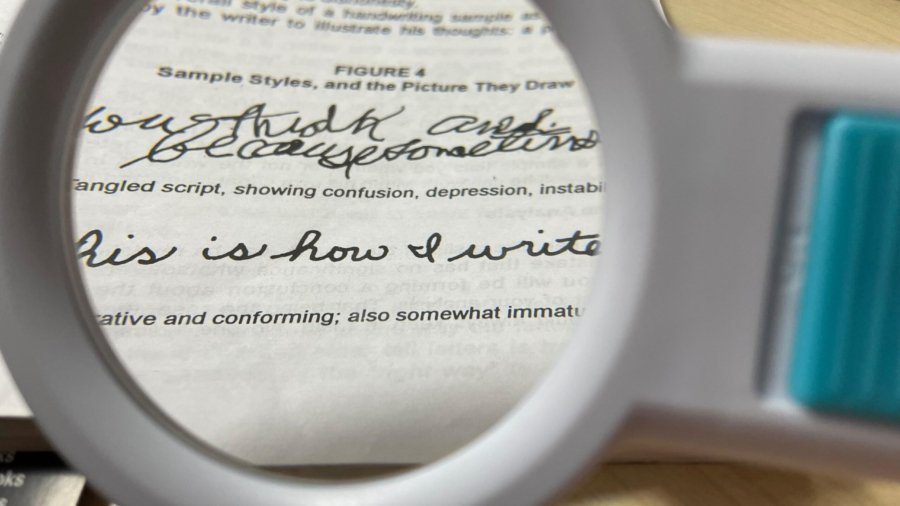
Initially, examiners conduct a visual inspection under normal and magnified conditions. At this stage, they look for disturbed paper fibres, ink feathering, stroke overlap, and abnormal writing features.

Furthermore, microscopic examination proves particularly effective for detecting overwriting and erasures.

Use of Specialised Lighting

Alternate Light Sources (ALS), including ultraviolet and infrared illumination, reveal ink differences invisible to the naked eye. Moreover, these light sources help identify chemical erasures and later additions with greater clarity.

Ink Differentiation Techniques

Ink differentiation determines whether the same or different inks appear within a document. For this purpose, experts commonly use:

  • Thin Layer Chromatography (TLC)

  • Spectral analysis

  • Infrared luminescence

Consequently, examiners can determine whether alterations occurred simultaneously or at a later time.

Sequence of Writing Examination

Sequence examination establishes the order in which strokes were applied. Importantly, this analysis answers critical questions regarding whether alterations preceded or followed the original writing.

Thus, stroke intersection analysis becomes a key component in disputed document cases.

Forensic Significance of Ink Alteration

Ink alteration examination carries substantial forensic and legal importance.

Establishing Document Authenticity

Detection of ink alteration directly challenges document authenticity. As a result, courts may question the reliability and evidentiary value of such documents.

Reconstruction of Events

Through systematic ink analysis, experts can reconstruct the sequence of writing events. Consequently, investigators gain insight into when and how the alteration occurred.

Supporting or Refuting Claims

In disputes involving checks, wills, contracts, and property records, forensic findings often support or contradict claims made by involved parties. Therefore, ink alteration analysis plays a decisive role in legal resolution.

Legal Admissibility

Courts rely heavily on expert opinions in questioned document cases. Accordingly, adherence to forensic protocols enhances the credibility and admissibility of evidence.

Challenges in Ink Alteration Examination

Despite technological progress, ink alteration examination faces limitations. For example, similar ink formulations may resist differentiation. Additionally, environmental exposure can alter ink properties over time. Moreover, improper handling of documents may damage crucial evidence.

Conclusion

Ink alteration examination remains a vital component of questioned document analysis. By applying systematic forensic methods, experts can reliably detect, interpret, and explain document alterations. Ultimately, the forensic significance of ink alteration lies in assisting courts to reach informed, fair, and scientifically supported decisions.
WhatsApp-Image-2023-12-12-at-11.53.41-AM

Fingerprint Examination Kit: Essential Tools for Forensic Identification

Fingerprint Examination Kit: Essential Tools for Forensic Identification

Fingerprint examination is one of the most trusted methods of personal identification in forensic science. From crime scene investigation to courtroom testimony, fingerprints provide strong physical evidence linking individuals to objects or locations. Behind every successful fingerprint analysis lies a well-equipped fingerprint examination kit, used by trained forensic professionals.

This blog explains what a fingerprint examination kit is, its key components, and its significance in forensic investigations.

What Is a Fingerprint Examination Kit?

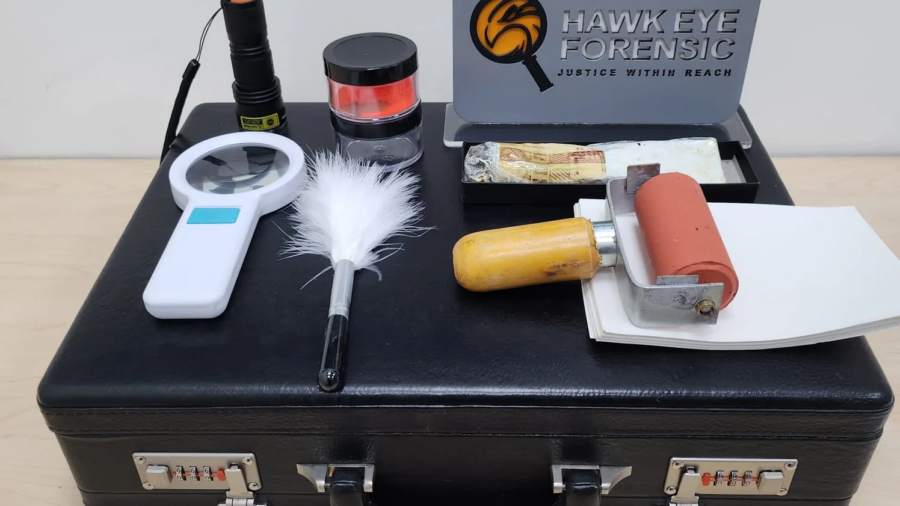
A fingerprint examination kit is a specialized set of tools used to detect, develop, record, preserve, and analyze fingerprints. These kits are used both at crime scenes and in forensic laboratories to ensure that fingerprint evidence is collected accurately and remains legally admissible.

Unlike casual fingerprint collection, forensic examination follows standardized protocols to avoid contamination and misinterpretation.

Importance of a Fingerprint Examination Kit

Most fingerprints recovered during investigations are latent fingerprints, which are invisible to the naked eye. Without proper tools, these prints can be easily damaged or lost.

A fingerprint examination kit helps forensic experts to:

  • Reveal latent fingerprints clearly

  • Preserve ridge details without distortion

  • Maintain proper documentation and chain of custody

  • Support reliable comparison and identification

Major Components of a Fingerprint Examination Kit

1. Personal Protective Equipment (PPE)

Used to prevent contamination of evidence.

Includes:

  • Nitrile or latex gloves

  • Face masks

  • Disposable shoe covers

Forensic significance: Protects fingerprints from contamination by the examiner.

2. Fingerprint Development Tools

a) Fingerprint Powders

Fingerprint powders are commonly used to develop latent prints on non-porous surfaces.

Types of powders:

  • Black powder

  • White powder

  • Grey powder

  • Magnetic powder

Brushes:

  • Fiberglass brush

  • Camel hair brush

  • Magnetic applicator

Suitable surfaces: Glass, plastic, metal, polished wood.

3. Chemical Reagents

Used mainly for porous surfaces.

  • Ninhydrin (paper, cardboard)

  • Iodine fuming (temporary development)

  • Silver nitrate (limited use)

Forensic significance: Reacts with fingerprint residues to make ridge patterns visible.

4. Fingerprint Lifting Materials

Once developed, fingerprints must be preserved.

  • Transparent lifting tape

  • Rubber lifters

  • Gel lifters for textured surfaces

Backing cards: Black or white contrast cards for clarity.

5. Inked Fingerprint Recording Tools

Used for collecting known or control fingerprints.

  • Ink pads or ink slab

  • Roller

  • Ten-print fingerprint cards

  • Cleaning wipes

6. Documentation and Measurement Tools

Accurate documentation is critical for court acceptance.

  • Evidence markers

  • Measurement scales

  • Permanent markers

  • Evidence labels and seals

7. Photography Equipment

Fingerprints must be photographed before lifting.

  • DSLR or forensic camera

  • Macro lens

  • Oblique lighting source

  • Tripod

Standard sequence: Photograph → Develop → Photograph → Lift → Label

8. Advanced Examination Tools (Optional)

Used by trained forensic professionals.

  • Alternate Light Source (UV/blue light)

  • Cyanoacrylate fuming chamber

  • Digital fingerprint scanners

Types of Fingerprint Examination Kits

  • Basic kit: Powders, brushes, lifting tapes

  • Professional forensic kit: Includes chemicals, ALS, and photography tools

  • Educational kit: Used for training forensic students

Role of Fingerprint Examination Kits in Court

The reliability of fingerprint evidence depends on:

  • Proper examination tools

  • Correct methodology

  • Clear documentation

  • Unbroken chain of custody

A standardized fingerprint examination kit strengthens the credibility of forensic testimony and helps evidence withstand legal scrutiny.

Conclusion

A fingerprint examination kit plays a vital role in transforming invisible ridge impressions into meaningful forensic evidence. When used correctly, these tools help establish identity, support investigations, and assist the justice system. For forensic students and professionals alike, understanding the components and use of a fingerprint examination kit is fundamental to effective fingerprint analysis.

WhatsApp Image 2025-10-09 at 17.14.49_4a7d76d7

Emerging Challenges in Questioned Document Examination

From Paper to Pixel: Emerging Challenges in Questioned Document Examination

Questioned Document Examination (QDE) has traditionally focused on handwritten and printed documents created on paper. For decades, forensic experts relied on ink analysis, paper characteristics, handwriting behavior, and physical alterations to determine authenticity. However, rapid technological advancement has transformed how documents are created, signed, stored, and transmitted. As a result, forensic document examination is now moving from paper to pixel, bringing new opportunities as well as significant challenges.

This shift demands a re-evaluation of traditional forensic principles while ensuring scientific reliability in legal proceedings.

Evolution of Documents: From Physical to Digital

Earlier, documents such as contracts, cheques, wills, and agreements existed primarily in physical form. These documents allowed examiners to assess tangible features like ink flow, pressure variation, pen lifts, paper texture, and indentations.

Today, many documents originate in digital environments. Emails, PDFs, scanned files, electronic signatures, and stylus-based handwriting on tablets are increasingly accepted for legal and financial transactions. Consequently, forensic experts must now examine documents that lack physical characteristics.

This transformation has fundamentally altered the scope of questioned document examination.

Traditional Strengths of Paper-Based Examination

Paper documents provide a wide range of forensic indicators. Experts can analyse:

  • Line quality and stroke sequence

  • Pen pressure and shading

  • Ink composition and ink dating

  • Paper fibres, fillers, and watermarks

  • Erasures, overwriting, and indentations

Moreover, handwriting on paper reflects natural neuromuscular behavior more directly. These features collectively strengthen the reliability of forensic opinions.

However, when documents move to digital platforms, many of these indicators disappear.

Emerging Challenges in Digital Questioned Documents

1. Absence of Physical Characteristics

Digital documents do not carry physical properties such as ink penetration, paper texture, or pressure impressions. Even when a handwritten document is scanned, the scanning process alters original features.

As a result, forensic examiners lose access to crucial characteristics that traditionally support authorship and authenticity assessments.

2. Stylus and Tablet-Based Writing

Writing on tablets and iPads introduces a different motor environment. The glass surface, stylus sensitivity, and software algorithms influence writing behavior. Unlike paper, digital platforms often auto-smooth strokes and regulate pressure.

Although some individual characteristics remain, the examiner must carefully distinguish between software-generated features and genuine writing traits. Therefore, direct comparison between paper signatures and digital signatures becomes complex.

3. Electronic and Digital Signatures

Electronic signatures differ significantly from handwritten signatures. In many cases, they involve:

  • Typed names

  • Click-based consent

  • Biometric or cryptographic verification

From a forensic perspective, these signatures may not reflect handwriting behavior at all. Consequently, questioned document examiners often face limitations when asked to opine on authorship of purely electronic signatures.

This raises important legal and scientific concerns regarding expert opinion.

4. Image Manipulation and Document Editing

Modern software allows easy alteration of digital documents. Text can be edited, copied, resized, or repositioned without leaving obvious traces. Signatures can be cut, pasted, or layered onto documents.

Although forensic tools can detect metadata inconsistencies and editing artifacts, sophisticated manipulation may still escape detection. Therefore, digital document examination requires collaboration with digital forensic experts.

5. Dependence on Secondary Evidence

In digital document cases, examiners often rely on scanned copies or photographs rather than original files. Compression, resolution loss, and file conversion degrade image quality.

As a result, the examiner’s opinion may become limited or qualified, affecting evidentiary weight in court.

Need for New Methodologies and Training

The transition from paper to pixel demands updated examination protocols. Forensic document examiners must now develop expertise in:

  • Digital imaging principles

  • File formats and metadata analysis

  • Stylus dynamics and software influence

  • Limitations of scanned and copied documents

Furthermore, standardization becomes essential. Without uniform guidelines, opinions may vary widely, raising concerns about reliability and admissibility.

Legal Implications and Courtroom Challenges

Courts increasingly encounter digital documents as evidence. However, judges and lawyers may not fully understand the limitations of digital examination. As a result, unrealistic expectations are sometimes placed on forensic experts.

It is essential for experts to clearly explain:

  • What can and cannot be examined

  • The limitations of digital documents

  • The difference between handwriting examination and digital authentication

Transparent communication strengthens the credibility of forensic testimony.

Balancing Tradition with Technology

Despite technological change, core forensic principles remain relevant. Writing behavior, natural variation, and individual characteristics still matter. However, experts must apply these principles cautiously in digital contexts.

Rather than replacing traditional methods, digital examination should complement them. A combined approach ensures scientific integrity while adapting to modern document practices.

Future of Questioned Document Examination

The future of QDE lies in interdisciplinary collaboration. Forensic document examiners, digital forensic analysts, legal professionals, and software developers must work together to establish reliable frameworks.

Research into stylus dynamics, software influence, and digital writing behavior will play a critical role. Additionally, continuous training and updated standards will help maintain forensic credibility.

Conclusion

The shift from paper to pixel has transformed questioned document examination. While digital documents offer convenience and speed, they introduce complex forensic challenges. The absence of physical characteristics, influence of software, and ease of manipulation require cautious interpretation.

Ultimately, the strength of forensic document examination lies not in resisting change but in adapting scientifically. By acknowledging limitations, refining methodologies, and embracing interdisciplinary approaches, forensic experts can continue to support justice in an increasingly digital world.