ChatGPT Image Apr 11, 2026, 10_34_46 AM

Can Handwriting Predict Personality

Handwriting is a unique human trait that reflects motor skills, habits, and learned patterns. However, a common question remains—can handwriting predict personality? Many people believe that the way we write reveals hidden aspects of our character. This idea forms the basis of personality studies in handwriting analysis, also known as graphology.

Therefore, it is important to separate scientific facts from popular myths when discussing handwriting and personality.

What is graphology?

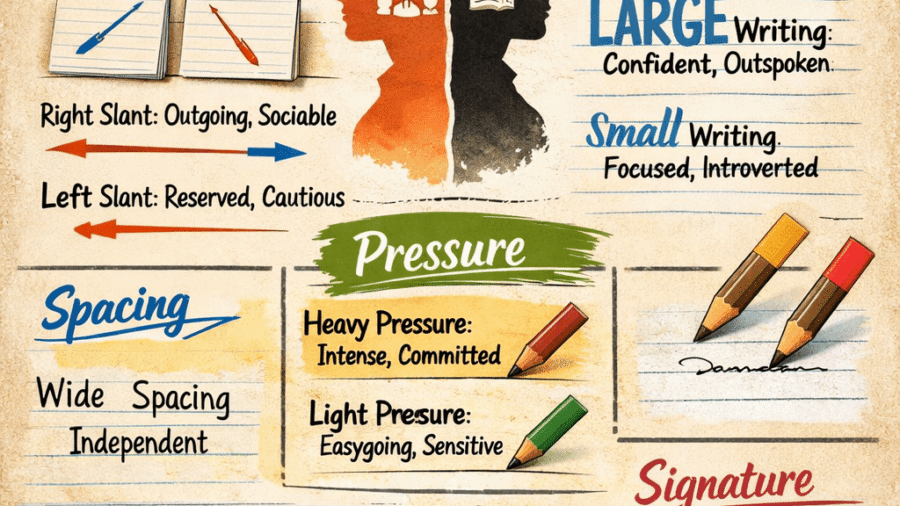
Graphology is the study of handwriting aimed at identifying personality traits. In simple terms, graphology suggests that handwriting reflects psychological characteristics. For example, analysts examine slant, spacing, size, and pressure to interpret behavior.

Moreover, graphology is widely used in non-forensic fields, such as recruitment and personal assessments. However, its scientific reliability remains debated.

 How Handwriting is Linked to Personality

Supporters of handwriting analysis believe that certain features of handwriting indicate specific personality traits. For instance:

  • Large handwriting may indicate confidence and extroversion
  • Small handwriting may suggest focus and introversion
  • The right slant may reflect emotional expressiveness
  • Heavy pressure may indicate strong emotions or determination

Thus, handwriting is often interpreted as a mirror of inner behavior.

 Scientific Perspective: Myth or Reality?

While graphology sounds intriguing, scientific research does not strongly support the idea that handwriting can predict personality accurately. Most psychologists consider it a pseudoscience.

  • Lack of consistent empirical evidence
  • Results vary between analysts
  • Interpretations can be subjective

However, handwriting can still reveal certain physical and neurological aspects, such as motor control or health conditions.

Handwriting in Forensic Science

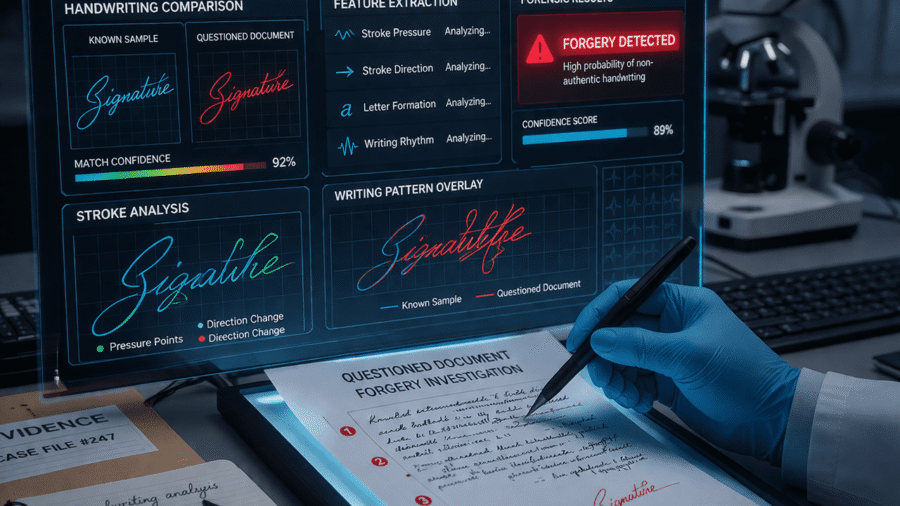
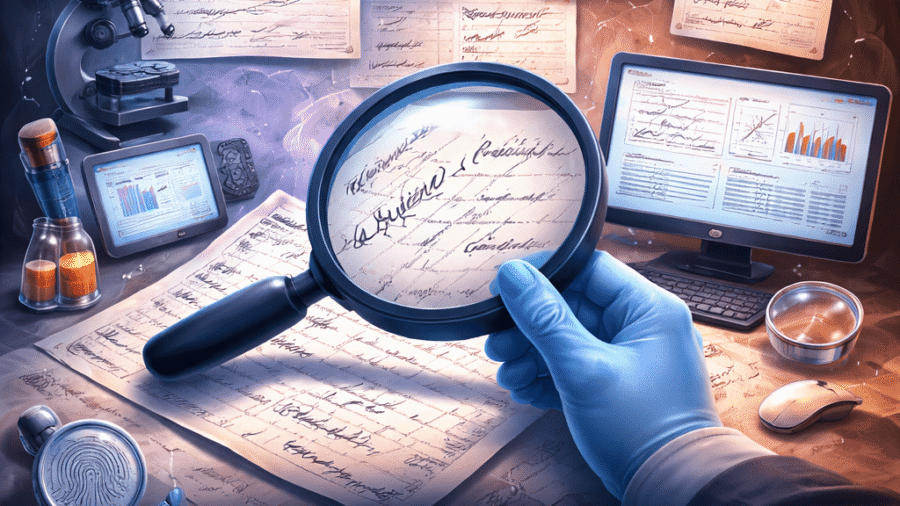
In forensic science, handwriting analysis serves a very different purpose. Experts focus on identification, not personality.

  • Verifying signatures
  • Detecting forgery
  • Comparing writing samples

Therefore, graphology in forensic science is not used to assess personality, but rather to establish authenticity and identity.

 Common Myths About Handwriting and Personality

Many myths surround the idea of personality prediction through handwriting. Let’s clarify a few:

 Myth 1: Handwriting reveals exact personality traits

Reality: It may suggest tendencies but not definitive traits.

 Myth 2: Graphology is scientifically proven

Reality: It lacks strong scientific validation.

Myth 3: Handwriting never changes

Reality: It changes with age, mood, and conditions.

Thus, relying solely on handwriting for personality assessment can be misleading.

What Handwriting Can Actually Reveal

Although handwriting cannot reliably predict personality, it can still provide useful insights.

  • Writing speed may reflect motor coordination
  • Pressure may indicate physical energy
  • Consistency may reflect practice and habit

In addition, sudden changes in handwriting may indicate stress or health issues.

Modern Alternatives to Personality Analysis

Today, psychologists rely on more reliable methods to assess personality. For example:

  • Psychometric tests
  • Behavioral analysis
  • Structured interviews

As a result, these methods provide more accurate and scientifically validated insights compared to handwriting analysis.

Should You Trust Handwriting Analysis?

Handwriting analysis can be intriguing and sometimes insightful. However, it should not be considered a scientifically reliable method for predicting personality.

Instead, it is best viewed as a supplementary or interpretive tool rather than a definitive assessment.

 Conclusion

Therefore can handwriting predict personality? The answer is not entirely. While handwriting may reflect certain habits or tendencies, it cannot accurately determine personality traits. Scientific evidence does not strongly support graphology as a reliable method.

In conclusion, handwriting analysis is valuable in forensic identification but limited in personality prediction. Therefore, it is important to approach such claims with caution and rely on scientifically proven methods for accurate personality assessment.

Fingerprint analysis tools and techniques

Tools & Equipment Used in Fingerprint Analysis

Fingerprint analysis is one of the most reliable methods of identification in forensic science. However, accurate results depend heavily on the tools and equipment used in fingerprint analysis. From crime scene investigation to laboratory examination, forensic experts rely on specialized instruments to detect, develop, and analyze fingerprints.

Therefore, understanding fingerprint analysis equipment is essential for anyone involved in forensic investigations.

 Importance of Tools in Fingerprint Analysis

The success of tools for latent fingerprint analysis depends on selecting the right method for each situation. For instance, different surfaces and environmental conditions require different tools.

  • Proper tools improve accuracy
  • Moreover, they help preserve delicate evidence
  • Additionally, they enhance the visibility of latent prints

Thus, forensic fingerprint tools play a crucial role in solving criminal cases.

Basic Tools Used in Fingerprint Analysis

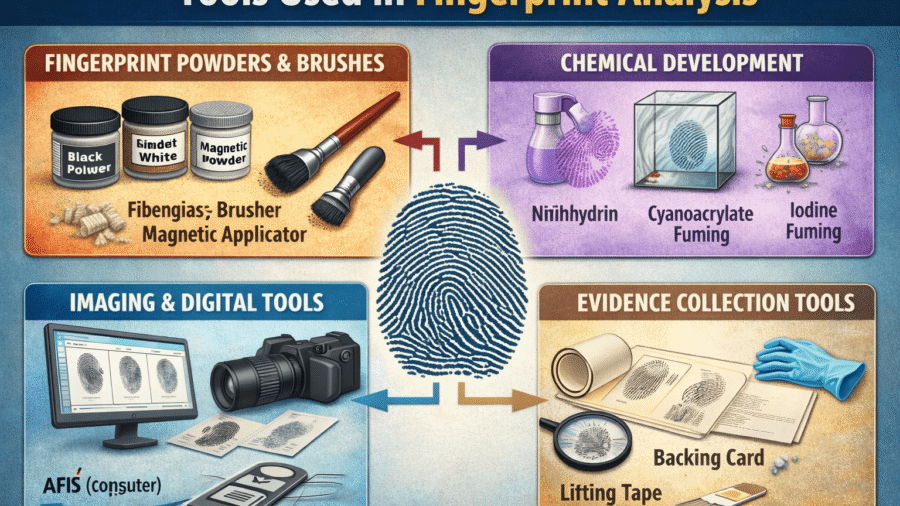
 Fingerprint Powders

Fingerprint powders are among the most common tools used in fingerprint analysis. They help visualise latent prints on non-porous surfaces.

  • Black powder for light surfaces
  • White or aluminium powder for dark surfaces
  • Magnetic powder for delicate prints

As a result, powders make invisible fingerprints visible.

Brushes for Powder Application

Brushes are used to apply fingerprint powder carefully. However, improper use can damage prints.

  • Fiberglass brushes
  • Feather brushes
  • Magnetic applicators

Therefore, skilled handling is essential to avoid distortion.

 Chemical Equipment for Fingerprint Development

Chemical methods are used when powders are not effective. In particular, they are useful for porous surfaces like paper.

 Ninhydrin

Ninhydrin reacts with amino acids in sweat to produce a purple colour.
Consequently, it is widely used in forensic laboratories.

 Cyanoacrylate (Super Glue Fuming)

This method is used for non-porous surfaces. When heated, the fumes adhere to fingerprint residue, making it visible.

Moreover, this technique is highly effective for plastic, glass, and metal surfaces.

Iodine Fuming

Iodine vapors temporarily develop fingerprints. However, the prints fade quickly, so they must be photographed immediately.

Optical and Imaging Tools

Modern fingerprint analysis relies heavily on optical tools. These tools improve detection and documentation.

Magnifying Glass and Microscopes

  • Help examine fine ridge details
  • Additionally, assist in identifying minute points

 Alternate Light Sources (ALS)

ALS uses different wavelengths of light to reveal hidden prints.
For example, UV light can make latent prints more visible.

 Digital Cameras

High-resolution cameras are used to capture fingerprint images.
Therefore, proper documentation is ensured for court presentation.

Digital Fingerprint Analysis Equipment

Technology has revolutionised fingerprint examination techniques. As a result, digital tools are now widely used.

 AFIS (Automated Fingerprint Identification System)

AFIS is a computerised system that matches fingerprints with large databases.

  • Fast comparison of prints
  • Moreover, reduces manual effort
  • High accuracy in identification

 Fingerprint Analysis Software

Advanced software helps enhance and compare prints.

  • Image enhancement
  • Pattern recognition
  • Automated matching

Thus, digital tools improve efficiency and reliability.

 Evidence Collection and Preservation Tools

Collecting fingerprints properly is just as important as analyzing them. Therefore, specialized tools are used for preservation.

 Lifting Tapes

  • Used to lift developed fingerprints
  • Preserve prints for further analysis

 Backing Cards

  • Provide contrast and support
  • Help in storing lifted prints

 Gloves and Protective Gear

  • Prevent contamination
  • Ensure evidence integrity

Consequently, proper handling ensures reliable results.

Challenges in Using Fingerprint Tools

Despite advanced tools, challenges still exist. For example:

  • Improper tool selection
  • Environmental interference
  • Human error

However, trained professionals can overcome these issues with experience and proper techniques.

 Future of Fingerprint Analysis Equipment

The future of fingerprint analysis equipment is driven by innovation. For instance, AI and machine learning are improving accuracy.

  • AI-based fingerprint recognition
  • Portable scanning devices
  • 3D fingerprint analysis

As a result, forensic investigations are becoming faster and more precise.

Conclusion

Tools and equipment used in fingerprint analysis are essential for accurate identification. From powders and chemicals to advanced digital systems, each tool plays a vital role.

In conclusion, understanding forensic fingerprint tools helps improve analysis, preserve evidence, and ensure justice. As technology advances, fingerprint examination techniques will continue to evolve, making forensic science more reliable than ever.

Identical twins' handwriting comparison

Twin Handwriting: Can Identical Twins Have Identical Writing?

Introduction

The concept of twin handwriting often raises an intriguing question: can identical twins have the same handwriting? Since identical twins share the same genetic makeup, many people assume their writing styles must also be identical. However, forensic science reveals a more complex reality.

In fact, forensic handwriting examination shows that while twins may develop similar writing patterns, their handwriting is never completely identical. Therefore, understanding the science behind twin handwriting becomes essential, especially in forensic investigations.

Understanding Twin Handwriting

Twin handwriting refers to the comparison of writing styles between identical or fraternal twins. Because identical twins share similar physical and neurological traits, their handwriting may appear alike at first glance.

However, handwriting is not determined by genetics alone. Instead, it develops through a combination of learning, environment, and individual motor habits. As a result, even identical twins develop subtle but detectable differences in their writing.

Why Twin Handwriting Looks Similar

There are several reasons why twin handwriting may appear similar:

1. Shared Learning Environment

Twins often attend the same schools and learn writing at the same time. Consequently, they receive similar instruction, which influences their writing style.

2. Similar Motor Skills

Because identical twins share genetic traits, their muscle coordination and fine motor skills may be alike. Therefore, their letter formation and writing rhythm can look similar.

3. Practice and Influence

Twins frequently observe and imitate each other. Over time, this mutual influence can lead to similar handwriting characteristics.

Why Twin Handwriting Is Never Identical

Despite these similarities, twin handwriting is never the same. Several factors contribute to these differences:

1. Individual Motor Development

Even minor differences in hand movement and muscle control create unique writing patterns.

2. Personal Habits

Each individual develops unique habits in spacing, pressure, and stroke sequence.

3. Natural Variations

Handwriting naturally varies every time a person writes. Therefore, exact duplication is impossible.

4. Psychological Factors

Mood, stress, and personality traits influence writing behavior. As a result, twins develop distinct writing styles over time.

Forensic Handwriting Examination in Twins

From a forensic perspective, analyzing twin handwriting can be challenging but not impossible. Experts rely on detailed examination techniques to identify differences.

Key Features Examined

  • Letter formation and structure
  • Writing pressure patterns
  • Spacing and alignment
  • Slant and stroke direction
  • Rhythm and writing speed

Even if two samples look similar, forensic experts focus on microscopic and behavioral details to distinguish between them.

Can Twins Copy Each Other’s Handwriting?

Yes, twins can attempt to imitate each other’s handwriting. However, even skilled imitation cannot perfectly replicate natural writing.

When someone copies handwriting, the result often shows signs such as the following:

  • Slow or hesitant strokes
  • Inconsistent pressure
  • Poor rhythm and flow

Therefore, forensic experts can usually detect imitation through detailed analysis.

Real-World Importance in Investigations

Twin handwriting analysis becomes particularly important in legal and criminal cases. For example:

  • Identifying the writer of anonymous notes
  • Verifying signatures in fraud cases
  • Distinguishing between suspects in investigations

In such cases, even small differences can play a crucial role in determining the truth.

Challenges in Twin Handwriting Analysis

High Similarity

The most significant challenge is the strong resemblance between writing styles, which may confuse initial observation.

Limited Samples

If only a few samples are available, distinguishing between twins becomes more difficult.

Intentional Disguise

Sometimes, individuals may intentionally alter their writing, adding complexity to the analysis.

Role of Technology

Modern technology has significantly improved handwriting analysis. Digital tools and AI-based systems help experts examine writing patterns with greater precision.

Additionally, software can analyze stroke patterns, pressure distribution, and writing dynamics. As a result, forensic experts can identify even subtle differences between twin handwriting samples.

Conclusion

Twin handwriting may appear strikingly similar, especially in the case of identical twins. However, no two individuals—even twins—can produce exactly identical handwriting.

Forensic handwriting examination proves that subtle differences always exist, and experts can identify them through detailed analysis. Ultimately, twin handwriting highlights the balance between genetic similarity and individual uniqueness, making it a fascinating subject in forensic science.

ChatGPT Image Apr 7, 2026, 11_41_57 AM

Deepfake Documents: The Next Big Threat in Document Fraud

Introduction

Recently, deepfake documents have become a major concern in document fraud. While deepfake technology first gained attention through videos and images, it now targets digital documents with alarming precision. As a result, detecting fraudulent content has become more difficult for individuals and organizations.

Moreover, professionals in digital forensics must adapt quickly to these evolving threats. You can also explore Digital Forensics Basics (/digital-forensics-basics) to understand the foundation of such investigations.

What Are Deepfake Documents in Document Fraud?

Deepfake documents are AI-generated or digitally manipulated files designed to appear authentic. Unlike traditional forgery, these documents replicate formatting, signatures, and layouts with high accuracy.

In addition, attackers often use machine learning models to study real documents before creating fake versions. Therefore, these documents can easily bypass basic verification systems.

How AI Creates Fake Documents

Artificial intelligence plays a key role in generating fraudulent documents. Typically, attackers follow a structured process:

  • Collect genuine document samples
  • Train AI models on fonts, structure, and signatures
  • Generate realistic replicas with altered information

Furthermore, modern tools can even simulate handwriting and official seals. As a result, the final document appears highly convincing.

Why Deepfake-Based Document Fraud Is Dangerous

High Realism and Accuracy

Deepfake-based documents closely resemble genuine ones. Therefore, even trained professionals may struggle to identify them without advanced tools.

Scalable Fraud Operations

Attackers can quickly produce multiple fake documents. Consequently, fraud becomes more widespread and harder to control.

Bypassing Traditional Verification

Many systems rely on visual checks. However, AI-generated documents can bypass these checks due to their precision.

Serious Financial and Legal Risks

Fraudulent documents can cause financial losses and legal complications. As a result, organizations must take preventive measures seriously.

Deepfake Documents vs Traditional Forgery

Traditional forgery involves manual alterations, which often leave visible traces. In contrast, deepfake documents use automation and AI, making them more sophisticated.

Additionally, traditional methods require time and effort, whereas AI tools enable rapid document creation. Therefore, the scale of fraud increases significantly.

Detection of Deepfake Documents in Digital Forensics

Digital forensics plays a vital role in identifying suspicious documents. Experts use multiple techniques to detect manipulation.

Metadata Analysis

Investigators examine file details such as timestamps and editing history. Any inconsistency may indicate tampering.

Formatting and Layout Review

Even advanced AI may produce small alignment or spacing errors. Experts carefully analyze these elements.

Pixel-Level Examination

Forensic tools detect irregularities at the pixel level. These hidden signs often reveal manipulation.

AI-Based Detection Tools

Interestingly, AI also helps detect fraudulent documents. Machine learning models identify patterns that humans may overlook.

For more profound insights, you can explore:

  • National Institute of Justice
  • Interpol Digital Crime Resources

Prevention Strategies Against AI Document Fraud

Organizations must adopt strong preventive measures to reduce risk.

  • Use secure digital signature systems
  • Implement multi-factor authentication
  • Train employees to identify suspicious documents
  • Conduct regular security audits

Additionally, understanding cybercrime investigation techniques (/cybercrime-investigation-techniques) can help strengthen your defence strategies.

Applications and Impact

Deepfake documents affect multiple sectors, including:

  • Banking and finance
  • Legal systems
  • Corporate businesses
  • Government documentation

Therefore, addressing this issue is essential across industries.

Conclusion

Deepfake documents represent a new and evolving challenge in document fraud. Their ability to mimic real documents with high accuracy makes them a powerful tool for cybercriminals.

However, with advanced forensic techniques and proper awareness, organizations can detect and prevent such threats. Ultimately, staying informed and adopting modern security measures is the key to protecting document integrity.

Causes of fingerprint distortion

Fingerprint Distortion: Causes and Impact on Identification

Fingerprint Distortion: Causes and Impact on Identification

Fingerprint evidence is one of the most reliable forms of identification in forensic science. However, fingerprints are not always perfect when recovered from a crime scene. Often, they appear altered or unclear due to various factors. This phenomenon is known as fingerprint distortion, and it can significantly affect the accuracy of identification.

Therefore, understanding fingerprint distortion is essential for forensic experts performing latent fingerprint analysis.

What is Fingerprint Distortion?

Fingerprint distortion refers to any alteration in the natural ridge pattern of a fingerprint. In simple terms, it occurs when the fingerprint does not accurately reflect the true pattern of the finger.

Moreover, distortion can happen during deposition, development, or even during the analysis process. As a result, it becomes challenging to match prints accurately.

 Causes of Fingerprint Distortion

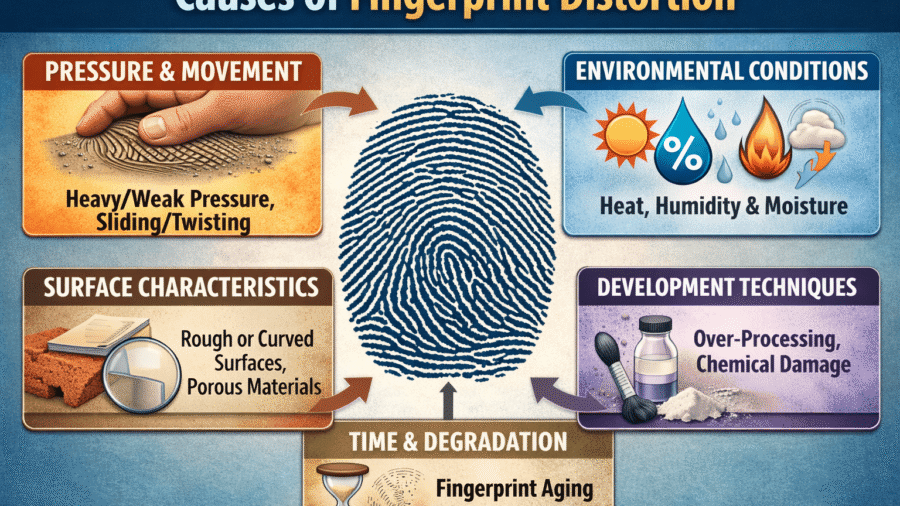
There are several causes of fingerprint distortion, and they can be broadly categorised into physical, environmental, and procedural factors.

 1. Pressure and Movement During Deposition

One of the most common causes of fingerprint distortion is the way a finger touches a surface. For instance, excessive pressure can flatten the ridges, while insufficient pressure may result in incomplete prints.

  • Heavy pressure causes ridge spreading
  • Light pressure leads to partial prints
  • Movement or sliding creates smudged or stretched patterns

Consequently, such distortions can make comparison more difficult.

 2. Environmental Conditions

Environmental factors also play a significant role. For example, heat, humidity, and moisture can alter fingerprint residue.

  • High temperatures can degrade sweat and oils
  • Humidity may blur ridge details
  • Water exposure can distort or wash away prints

Consequently, forensic experts frequently encounter distorted fingerprints in outdoor or uncontrolled environments.

 3. Surface Characteristics

The type of surface on which a fingerprint is deposited greatly influences distortion. Generally, uneven or textured surfaces create more distortion.

  • Rough surfaces break ridge continuity
  • Curved surfaces stretch the pattern
  • Porous materials absorb residue unevenly

Thus, surface variation directly impacts the clarity of fingerprint evidence.

 4. Time and Degradation

Time is another important factor. Over time, fingerprint residue naturally deteriorates. Additionally, exposure to environmental elements accelerates this process.

  • Older prints lose sharpness
  • Residue becomes faint
  • Details may disappear completely

Therefore, delayed evidence collection increases the chances of distortion.

 5. Improper Development Techniques

Fingerprint development methods can also introduce distortion. For instance, excessive use of powders or chemicals may damage ridge details.

  • Over-brushing can smear prints
  • Incorrect chemical application alters patterns
  • Poor lifting techniques distort the structure

Hence, proper handling is critical in latent fingerprint analysis.

 Impact of Fingerprint Distortion on Identification

The impact of fingerprint distortion on identification is significant. Firstly, distortion can reduce the clarity of ridge details, making comparison difficult. Secondly, it may lead to incorrect interpretations if not handled carefully.

 1. Reduced Accuracy

Distorted fingerprints may not match clearly with known samples. As a result, identification accuracy decreases.

 2. Risk of Misidentification

In extreme cases, distortion can lead to false matches or exclusions. However, trained experts minimize this risk through careful analysis.

 3. Increased Analysis Time

Distorted prints require more time and expertise to analyze. Moreover, examiners must carefully evaluate each feature before concluding.

 4. Limited Evidentiary Value

Severely distorted prints may not be suitable for court presentation. Consequently, they may weaken a case if no other evidence is available.

 Techniques to Overcome Fingerprint Distortion

Despite these challenges, forensic experts use advanced techniques to handle distortion. For example:

  • Digital enhancement tools improve clarity
  • Comparison of multiple features rather than relying on one area
  • Use of alternative light sources to reveal hidden details
  • Advanced imaging software for pattern reconstruction

Therefore, even distorted fingerprints in forensics can still provide valuable evidence.

 Future Advancements in Fingerprint Analysis

Technology is continuously improving fingerprint examination. For instance, artificial intelligence is being used to detect patterns in distorted prints.

  • AI-based matching systems
  • 3D fingerprint analysis
  • Automated enhancement tools

As a result, the gradual reduction of fingerprint distortion’s impact on identification is taking place.

Conclusion

Fingerprint distortion is a common challenge in forensic science. However, proper knowledge and advanced techniques can minimize its impact. Factors such as pressure, environment, surface type, and time all contribute to distortion.

In conclusion, understanding the causes of fingerprint distortion and its effects on identification is essential for accurate forensic analysis. Ultimately, even imperfect fingerprints can reveal the truth when examined carefully.

ChatGPT Image Apr 2, 2026, 11_40_22 AM

How Environmental Factors Affect Fingerprint Evidence

Fingerprint evidence plays a crucial role in modern forensic science. However, many people assume fingerprints remain unchanged once deposited at a crime scene. In reality, environmental factors affect fingerprint evidence significantly, influencing its visibility, quality, and usability.

Therefore, understanding these factors is essential for accurate latent fingerprint analysis and effective evidence recovery.

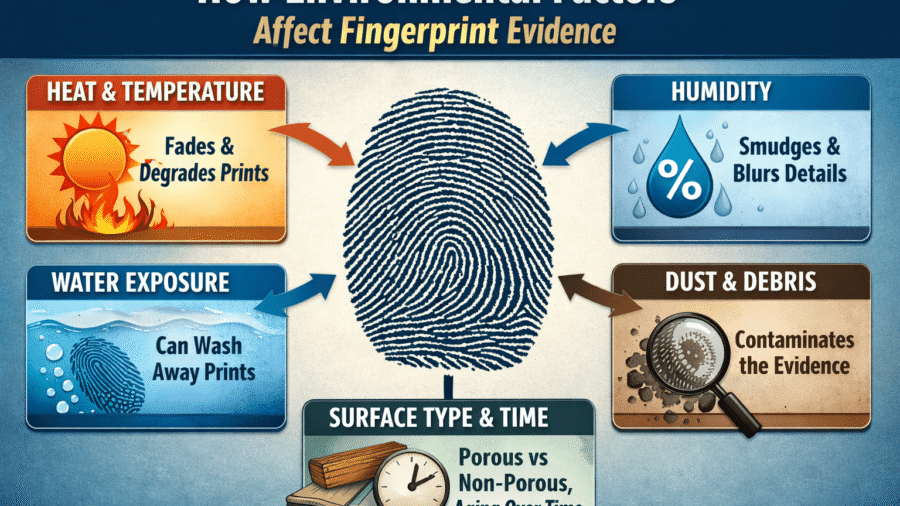
1. Temperature: Heat Can Destroy Evidence

Temperature is one of the most critical factors affecting fingerprints. For instance, high heat can cause the sweat and oils in fingerprints to evaporate quickly. As a result, prints may become faint or completely degraded.

  • High temperatures break down organic components
  • Moreover, extreme heat (such as in fire scenes) can destroy evidence entirely
  • In contrast, low temperatures may help preserve prints for longer

Thus, investigators often struggle to recover fingerprint evidence in forensics from heat-exposed environments.

 2. Humidity and Moisture: A Double-Edged Sword

Humidity plays a complex role in fingerprint preservation. On one hand, a small amount of moisture can help retain fingerprint residue. On the other hand, excessive humidity can cause smudging and degradation.

  • High humidity blurs ridge details
  • Additionally, moist environments can spread residue
  • Furthermore, water exposure may distort prints

Consequently, maintaining the right balance of moisture is crucial during evidence collection.

3. Water Exposure: Can Fingerprints Survive?

A common myth is that water destroys fingerprints. However, this claim is not always true. In fact, fingerprints can sometimes survive water exposure depending on the surface.

  • Prints on porous surfaces may still be recoverable after drying
  • Moreover, specialized techniques can reveal hidden prints
  • Even so, prolonged exposure may weaken the evidence

Therefore, advanced latent fingerprint analysis is essential in such cases.

 4. Air and Dust: Silent Contaminators

Airborne particles such as dust and pollutants also affect fingerprint evidence. For example, dust can settle over prints and obscure ridge details. Similarly, continuous air exposure can degrade residue over time.

  • Dust makes prints harder to detect
  • Additionally, airflow can distort prints
  • In outdoor scenes, wind may partially remove evidence

As a result, these factors affecting fingerprints are especially critical in open environments.

 5. Surface Type: The Foundation Matters

The type of surface plays a major role in how environmental factors affect fingerprints. Generally, surfaces are classified as porous and non-porous.

🔹 Non-Porous Surfaces (Glass, Metal, Plastic)

  • Prints remain on the surface
  • However, they are more vulnerable to environmental damage
  • Therefore, they require quick processing

🔹Porous Surfaces (Paper, Wood)

  • Absorb fingerprint residue
  • As a result, they offer better protection
  • However, they require chemical methods for development

Thus, surface type directly impacts the preservation of fingerprint evidence.

6. Time: The Gradual Enemy

Time is another critical factor. Over time, fingerprint residue naturally degrades. Furthermore, environmental exposure accelerates this process.

  • Older prints lose clarity
  • Additionally, prolonged exposure reduces usability
  • Eventually, prints may become undetectable

Therefore, timely evidence collection is essential in forensic investigations.

7. Chemical Exposure: A Hidden Threat

Chemicals such as cleaning agents can significantly affect fingerprints. For instance, household cleaners may partially or completely remove prints. Moreover, some chemicals react with residue, altering its composition.

  • Cleaning agents can destroy evidence
  • Additionally, improper handling may contaminate prints
  • However, in some cases, recovery is still possible

Thus, even chemically exposed fingerprints may still be analyzed using advanced techniques.

Importance in Forensic Investigations

Understanding how environmental factors affect fingerprint evidence is essential. Because of this knowledge, forensic experts can:

  • Choose appropriate development techniques
  • Preserve evidence more effectively
  • Moreover, interpret degraded prints accurately

As a result, modern fingerprint evidence in forensics has become more reliable, even under challenging conditions.

 Conclusion

Fingerprint evidence remains a powerful investigative tool. However, it is not immune to environmental influences. Factors such as temperature, humidity, water, and time all play significant roles.

In conclusion, by understanding these factors affecting fingerprints, forensic professionals can improve the preservation of fingerprint evidence. Ultimately, this leads to more accurate and reliable forensic outcomes.

ChatGPT Image Apr 1, 2026, 04_00_25 PM

E-Signatures vs Handwritten Signatures: Which is More Secure?

Introduction

In today’s digital era, the way people sign documents is changing rapidly. Traditionally, individuals relied on handwritten signatures, also known as wet signatures. However, businesses and individuals now increasingly prefer e-signatures for speed and convenience.

Therefore, which option is actually more secure? To answer this question, we need to compare both methods in terms of security, reliability, and forensic value.

What is a handwritten signature?

A handwritten signature is a unique mark that a person writes on a physical document. For centuries, people have used it to confirm identity and intent.

Moreover, each signature carries distinctive characteristics such as stroke order, pressure, and rhythm. Because of this, no two signatures are exactly identical.

Security Features

  • Unique writing patterns
  • Natural variations in pressure and speed
  • Personal style that develops over time

Limitations

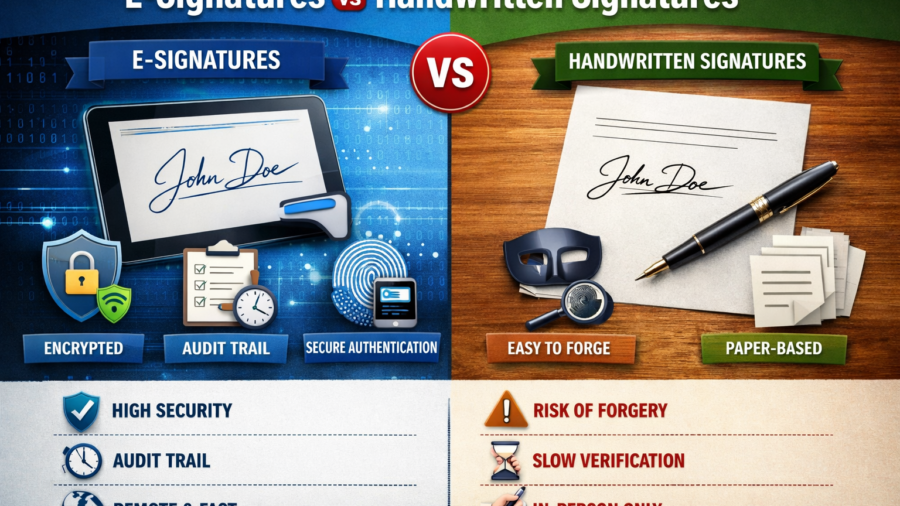
However, handwritten signatures also come with serious risks. For example, criminals can copy or trace signatures after practice. In addition, scanned documents make duplication even easier.

As a result, handwritten signatures lack built-in verification systems and depend heavily on human judgment.

What is an E-Signature?

In contrast, an e-signature allows users to sign documents electronically. It can range from a simple typed name to a highly secure digital signature backed by encryption.

Types of E-Signatures

  • Simple (typed or click-to-sign)
  • Advanced (biometric-based)
  • Digital signatures (certificate and encryption-based)

Therefore, not all e-signatures offer the same level of security. Still, advanced and digital signatures provide significantly stronger protection.

Security Features of E-Signatures

Unlike traditional signatures, e-signatures include multiple layers of protection. As a result, they reduce the chances of fraud.

1. Encryption

First, digital signatures use encryption to protect document integrity. This ensures that no one can alter the document without detection.

2. Audit Trails

Additionally, systems record every action, including viewing, signing, and editing. Consequently, investigators can track the complete history of a document.

3. Authentication

Before signing, users often verify their identity through OTPs, emails, or biometrics. Therefore, unauthorised access becomes much harder.

4. Tamper Detection

Most importantly, the system immediately flags any modification after signing. This feature adds a strong layer of security.

E-Signatures vs Handwritten Signatures: Security Comparison

1. Risk of Forgery

Handwritten signatures can be forged with practice. On the other hand, encrypted e-signatures are extremely difficult to replicate.

2. Verification Process

Traditionally, experts analyze handwritten signatures to confirm authenticity. However, e-signatures include built-in verification tools like audit logs.

3. Tampering Detection

Handwritten documents do not alert users to changes. In contrast, e-signature systems instantly detect tampering.

4. Legal Validity

Both methods hold legal validity in many countries, including India, under the IT Act, 2000. Therefore, users can rely on either option in legal contexts.

5. Dependency

Handwritten signatures rely on human observation. Meanwhile, e-signatures depend on technology and system security.

Forensic Perspective

From a forensic standpoint, both methods offer different types of evidence.

Handwritten Signatures

Experts examine ink, pressure, and stroke patterns. While this approach provides physical evidence, it often takes time and may involve subjective interpretation.

E-Signatures

In contrast, e-signatures provide digital evidence such as metadata, timestamps, and IP logs. Therefore, investigators can verify authenticity more quickly and objectively.

Overall, e-signatures provide stronger and more reliable forensic evidence.

Common Misconceptions

❌ “E-signatures are easy to hack.”

However, advanced e-signatures use strong encryption, which makes them highly secure.

❌ “Handwritten signatures are always safer.”

In reality, they are more vulnerable to forgery and lack real-time verification.

When Should You Use Each?

✅ Use Handwritten Signatures When:

  • You require physical presence
  • Legal traditions demand it
  • You handle informal agreements

✅ Use E-Signatures When:

  • You need speed and efficiency
  • You manage remote transactions
  • You require strong security and tracking

Future of Signatures

Looking ahead, digital adoption will continue to grow. In fact, technologies like biometric authentication, blockchain, and AI will further improve e-signature security.

As a result, organizations will increasingly move toward paperless systems.

Final Verdict

Clearly, when we compare e-signatures vs handwritten signatures, e-signatures offer better security, faster verification, and stronger fraud prevention.

However, the right choice still depends on the situation. Even so, the trend strongly favors digital solutions.

Conclusion

To sum up, e-signatures provide a modern, secure, and efficient way to sign documents. While handwritten signatures still have their place, they cannot match the advanced security features of digital systems.

Therefore, individuals and organizations should adopt e-signatures to enhance both security and convenience in today’s digital world.

ChatGPT Image Mar 31, 2026, 10_58_41 AM

Ink Differentiation Using Chromatography Techniques in Forensic Document Examination

Introduction

In forensic document examination, identifying whether a document has been altered is crucial. One of the most effective methods used for this purpose is ink differentiation. In particular, chromatography techniques allow experts to analyze and compare inks used in questioned documents.

As document fraud increases, these scientific methods have become essential tools for forensic investigators to ensure authenticity and detect tampering.

What is Ink Differentiation?

Ink differentiation is the process of distinguishing between different inks used in a document. In other words, it helps determine whether multiple inks were used at different times or by different individuals.

Furthermore, this technique is especially useful in cases involving:

  • Altered legal documents
  • Forged signatures
  • Added or modified text

Therefore, it plays a vital role in forensic investigations.

Introduction to Chromatography

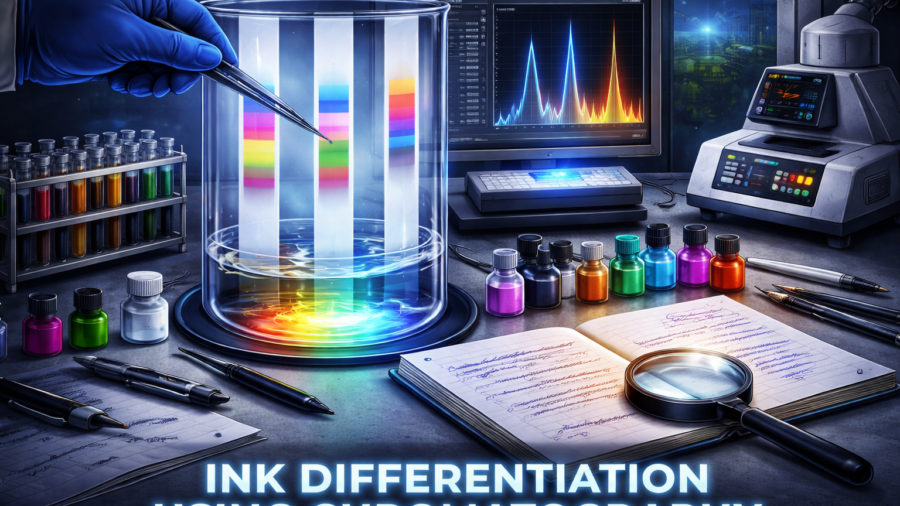
Chromatography is a laboratory technique used to separate components of a mixture. In the context of forensic science, it helps break down ink into its chemical components.

Typically, inks contain dyes, pigments, and solvents. By separating these elements, forensic experts can compare different ink samples accurately.

Types of Chromatography Used in Ink Analysis

Paper Chromatography

First of all, paper chromatography is one of the simplest and most commonly used methods. A small ink sample is placed on paper and exposed to a solvent, which separates the ink into different रंग components.

Thin Layer Chromatography (TLC)

Next, TLC uses a coated plate instead of paper. As a result, it provides more precise separation and better analysis of ink components.

Gas Chromatography

Additionally, gas chromatography is used for analyzing volatile components of ink, such as solvents.

High-Performance Liquid Chromatography (HPLC)

Finally, HPLC is an advanced technique that offers highly accurate results and is widely used in forensic laboratories.

How Chromatography Helps in Ink Differentiation

Chromatography works by separating ink into its individual chemical components. As a result, each ink produces a unique pattern, often called a chromatogram.

For example, two inks that appear identical to the naked eye may show completely different patterns when analyzed.

Therefore, experts can:

  • Identify different inks used in a document
  • Determine whether additions were made later
  • Link ink to a specific pen or source

Importance in Forensic Document Examination

Ink differentiation is crucial for verifying document authenticity. In many cases, criminals attempt to alter documents by adding or changing information.

However, chromatography can reveal these changes by detecting inconsistencies in ink composition.

Moreover, it helps forensic experts:

  • Establish timelines for writing
  • Detect forgery and alterations
  • Provide scientific evidence in court

Challenges in Ink Differentiation

Sample Destruction

On one hand, some chromatography techniques require small samples, which may slightly damage the document.

Similar Ink Composition

On the other hand, modern inks may have similar chemical compositions, making differentiation difficult.

Environmental Factors

Additionally, exposure to light, heat, and moisture can affect ink composition over time.

Role of Technology in Modern Ink Analysis

With technological advancements, ink differentiation has become more precise. For instance, digital imaging and spectroscopy are often combined with chromatography for better results.

Furthermore, automated systems can analyze chromatograms quickly and accurately.

Consequently, these innovations enhance the reliability of forensic examinations.

Applications of Chromatography in Forensics

Chromatography techniques are widely used in:

  • Document forgery detection
  • Fraud investigations
  • Historical document analysis
  • Legal dispute resolution

In addition, they are also used in other forensic fields such as drug analysis and toxicology.

Conclusion

To sum up, ink differentiation using chromatography techniques is a powerful tool in forensic document examination. By separating ink into its chemical components, experts can detect alterations and verify authenticity.

Ultimately, as forensic science continues to evolve, these techniques will remain essential in combating document fraud and ensuring justice.

ChatGPT Image Mar 30, 2026, 12_03_48 PM

AI-Based Handwriting Analysis in Questioned Documents: The Future of Forensic Examination

Introduction

In today’s digital age, forensic science is evolving rapidly with the integration of artificial intelligence. As a result, AI handwriting analysis is transforming how experts examine questioned documents. Traditionally, handwriting examination relied heavily on manual comparison; however, modern AI tools now enhance accuracy and efficiency.

Moreover, the growing number of document fraud cases has made it essential to adopt advanced technologies for reliable analysis.

What is AI Handwriting Analysis?

AI handwriting analysis refers to the use of machine learning algorithms and computer vision techniques to examine and compare handwriting samples. In simple terms, it automates the process of identifying writing patterns and detecting inconsistencies.

Furthermore, these systems are trained on large datasets, enabling them to recognize subtle differences that may not be easily visible to the human eye.

Role in Questioned Document Examination

Questioned document examination involves verifying the authenticity of documents such as contracts, wills, signatures, and anonymous notes. In this context, AI plays a crucial role by providing objective and data-driven results.

For instance, AI tools can:

  • Compare handwriting samples instantly
  • Detect forged signatures
  • Analyze writing speed and pressure patterns
  • Identify disguised or altered writing

Therefore, AI significantly improves the reliability of forensic conclusions.

Key Technologies Behind AI Handwriting Analysis

Machine Learning Algorithms

First of all, machine learning models are trained to recognize handwriting features such as stroke patterns and letter formation. These models continuously improve as more data is processed.

Computer Vision

Next, computer vision enables systems to analyze images of handwritten text. It detects shapes, spacing, and alignment with high precision.

Pattern Recognition

Additionally, AI identifies recurring patterns in handwriting. As a result, it becomes easier to distinguish between genuine and forged writing.

Neural Networks

Finally, deep learning models, especially neural networks, simulate human brain functions to analyze complex handwriting traits.

Advantages of AI in Handwriting Analysis

AI offers several benefits in forensic document examination:

  • Higher accuracy: Reduces human error
  • Speed: Processes large datasets quickly
  • Consistency: Provides standardized results
  • Scalability: Handles multiple cases efficiently

Moreover, AI can work alongside human experts, enhancing decision-making rather than replacing it.

Challenges and Limitations

Despite its advantages, AI handwriting analysis faces certain challenges:

Data Quality

On one hand, AI systems require high-quality datasets for training. Poor data can affect accuracy.

Variability in Handwriting

On the other hand, natural variations in handwriting can make analysis complex.

Ethical Concerns

Additionally, issues related to data privacy and misuse of AI must be addressed.

Legal Acceptance

Furthermore, courts may require validation before accepting AI-generated results as evidence.

Applications in Real-World Investigations

AI handwriting analysis is widely used in various fields:

  • Criminal investigations
  • Fraud detection
  • Banking and financial verification
  • Historical document authentication

For example, it helps detect forged signatures in financial transactions and verify legal documents.

Future of AI in Questioned Documents

Looking ahead, AI is expected to play an even bigger role in forensic science. Innovations such as real-time handwriting verification and integration with biometric systems are on the rise.

Consequently, the combination of AI and forensic expertise will lead to more accurate and efficient investigations.

Conclusion

To sum up, AI handwriting analysis is revolutionizing questioned document examination. Combining advanced algorithms with forensic expertise enhances accuracy, speed, and reliability.

Ultimately, as technology continues to evolve, AI will become a vital tool for detecting forgery and ensuring document authenticity.

ChatGPT Image Mar 27, 2026, 11_51_34 AM

Forensic Handwriting Examination: Detecting Truth in Documents

Forensic Handwriting Examination: Detecting Truth in Documents

In the world of forensic science, documents often hold critical evidence. From legal contracts to handwritten notes, every stroke of a pen can reveal important clues. Forensic handwriting examination plays a vital role in uncovering the truth behind such documents. It helps experts determine authenticity, identify writers, and detect forgery.

Therefore, this field is essential in both criminal investigations and civil disputes.

What is forensic handwriting examination?

Forensic handwriting examination, also known as questioned document examination, involves the scientific analysis of handwriting to verify its authenticity. Experts study various characteristics of writing to determine whether a document is genuine or forged.

In simple terms, it is the process of comparing known handwriting samples with questioned documents to detect similarities or differences.

Key Principles of Handwriting Analysis

Handwriting is considered unique to each individual. However, it is not completely unchangeable. Experts rely on certain principles while conducting handwriting analysis in forensics:

  • Individuality: No two people write the same
  • Natural variation: A person’s handwriting may vary slightly over time
  • Consistency: Genuine writing shows consistent patterns

Thus, examiners look for a combination of similarities and natural variations rather than exact matches.

Techniques Used in Forensic Handwriting Examination

Experts use various scientific techniques to analyze handwriting. Moreover, these methods ensure accuracy and reliability.

1. Visual Examination

Initially, examiners study the document using the naked eye or magnification tools. They analyze:

  • Letter shapes and formations
  • Spacing between words and letters
  • Writing speed and pressure

2. Microscopic Analysis

Additionally, microscopes help identify fine details such as ink flow, pen lifts, and stroke order.

3. Digital Analysis

Modern technology allows experts to use software for precise comparisons. Consequently, experts can detect even subtle differences.

4. Signature Verification

Signatures are one of the most commonly examined elements. Therefore, signature verification is crucial in financial and legal fraud cases.

Detecting Forgery in Documents

Forgery is one of the primary concerns in document examination. However, detecting forgery is not always straightforward. There are different types of forgery:

🔹 Simple Forgery

The forger writes a name without trying to imitate the original handwriting.

🔹 Simulated Forgery

The forger attempts to copy someone else’s handwriting or signature.

🔹 Traced Forgery

The original writing is traced to create a duplicate.

In each case, forensic experts analyze inconsistencies such as unnatural pen pressure, slow writing, and tremors. Consequently, these signs help in detecting forgery in documents.

Applications in Real-World Cases

Forensic handwriting examination is widely used in various scenarios. For example:

  • Legal disputes: Verifying wills, contracts, and agreements
  • Financial fraud: Detecting forged signatures on checks or documents
  • Criminal cases: Identifying anonymous letters or threat notes
  • Historical investigations: Authenticating old manuscripts

As a result, this field plays a crucial role in delivering justice.

 Challenges in Handwriting Examination

Despite its importance, forensic handwriting examination comes with challenges. Firstly, handwriting can change due to age, illness, or emotional state. Secondly, skilled forgers may imitate writing convincingly.

  • Limited or poor-quality samples
  • Intentional disguise of handwriting
  • Lack of sufficient comparison material

Nevertheless, trained experts can still reach reliable conclusions using scientific methods.

Importance in Forensic Science

Understanding forensic handwriting examination is essential because it helps uncover hidden truths. Moreover, it provides valuable evidence in courts and investigations.

  • Supports criminal investigations
  • Strengthens legal arguments
  • Helps prevent fraud

Therefore, handwriting analysis remains a powerful tool in forensic science.

Future of Handwriting Examination

With advancements in technology, handwriting analysis is evolving. For instance, we are using artificial intelligence and machine learning to enhance accuracy.

  • AI-based handwriting recognition
  • Digital forensic tools
  • Improved imaging techniques

As a result, the future of handwriting analysis in forensics looks more precise and reliable than ever.

 Conclusion

Forensic handwriting examination is a fascinating and essential branch of forensic science. In conclusion, it helps detect truth in documents by analyzing writing patterns, identifying inconsistencies, and exposing forgery.

Ultimately, whether it is a disputed signature or an anonymous note, handwriting analysis plays a key role in uncovering the truth and ensuring justice.