ChatGPT Image Feb 27, 2026, 10_59_39 AM

Forensic Examination of Anonymous Letters & Threat Notes

Forensic Examination of Anonymous Letters & Threat Notes

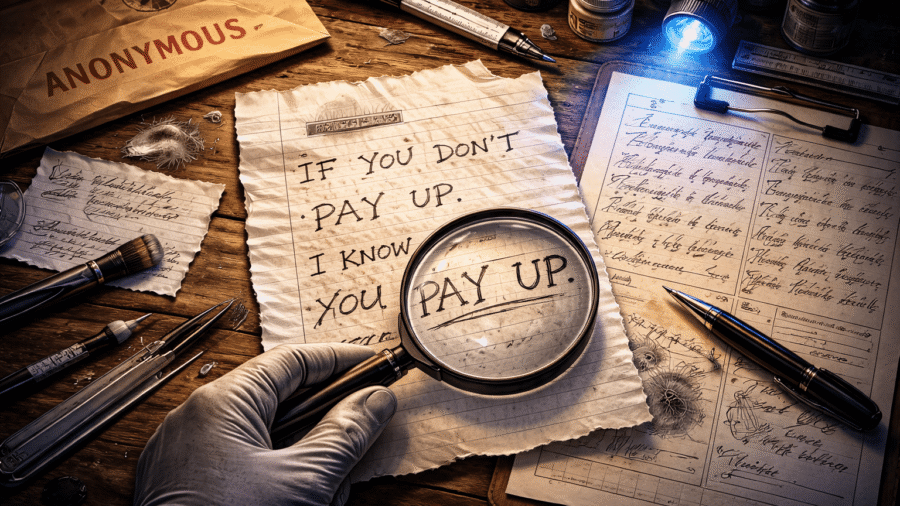
The forensic examination of anonymous letters and threat notes plays a critical role in criminal and civil investigations involving intimidation, extortion, harassment, and threats. From handwritten notes to typed anonymous communications, forensic document experts analyze these materials to uncover authorship clues, link multiple documents, and assess the intent behind the message. Through handwriting analysis, linguistic evaluation, and material examination, investigators often extract valuable evidence even when the sender attempts to remain unidentified.

Nature of Anonymous Letters and Threat Notes

Initially, anonymous letters and threat notes appear in many forms. For example, offenders may leave handwritten notes at crime scenes, send printed letters through the postal system, or write short threats on scraps of paper. In addition, some individuals slip anonymous notes under doors or leave them in public places.

Moreover, writers deliberately design these documents to conceal their identities. For this reason, they often use block letters, altered handwriting, deliberate misspellings, or emotionally neutral language. Nevertheless, writers rarely succeed in achieving complete anonymity.

Objectives of Forensic Examination

First and foremost, forensic experts aim to assess whether an anonymous document can be associated with a specific individual. In addition, they attempt to determine whether one person authored multiple anonymous letters.

Furthermore, experts actively look for signs of handwriting disguise, compare questioned writing with known samples, and evaluate the seriousness and intent of the threat. Consequently, professionals rely on systematic scientific methods rather than assumptions or speculation.

Handwriting Examination

When an anonymous letter contains handwriting, forensic document examiners rely heavily on handwriting analysis.

Identification of Handwriting Characteristics

To begin with, experts analyze stroke formation, line quality, spacing, proportions, pen pressure, and writing rhythm. Importantly, writers struggle to suppress many habitual features even when they attempt disguise.

For instance, stroke direction, writing speed, and movement patterns usually remain consistent. Therefore, experts focus on these natural traits to assess authorship.

Disguised Handwriting in Threat Notes

In many cases, writers intentionally disguise their handwriting in threat notes. For example, they may write only in capital letters, slow down their writing, alter slant and size, or use their non-dominant hand.

However, disguise often introduces problems. As a result, the writing shows tremors, hesitations, inconsistent spacing, and unnatural letter shapes. Consequently, these features alert experts to deliberate disguise rather than genuine variation.

Linguistic and Stylistic Analysis

In addition to handwriting, forensic experts carefully examine language and writing style.

Examination of Language Use

Firstly, experts study vocabulary, grammar, sentence structure, spelling patterns, and punctuation habits. Moreover, writers often repeat specific spelling errors without realizing it.

For example, repeated misuse of certain words or consistent grammatical mistakes across multiple letters strongly suggests common authorship.

Content and Psychological Indicators

Furthermore, the content of anonymous letters often reflects the writer’s psychological state. For instance, word choice and tone may reveal anger, obsession, resentment, or fear.

Additionally, references to personal grievances or insider information frequently suggest that the writer knows the victim. Thus, linguistic analysis helps investigators understand both authorship and motive.

Paper and Writing Instrument Examination

Besides handwriting and language, forensic experts examine the physical components of anonymous letters.

Paper Examination

To begin with, experts evaluate paper size, quality, texture, folds, tears, and cut edges. Moreover, similarities in paper across multiple letters may indicate a common source.

Consequently, even ordinary paper can provide meaningful forensic information.

Ink and Writing Instrument Examination

Similarly, experts analyze ink to determine whether one writing instrument produced multiple documents. In addition, ink examination can reveal differences between entries within the same document.

As a result, experts may uncover additions, overwriting, or later alterations.

Printed and Typed Anonymous Letters

Not all anonymous letters contain handwriting. In fact, many offenders use typed or printed documents.

Printer and Formatting Examination

In such cases, forensic experts examine font styles, margins, spacing, alignment, and formatting habits. Moreover, printer defects or toner characteristics may help link documents to a specific device.

Therefore, even digitally produced anonymous letters leave behind traceable forensic features.

Linking Multiple Anonymous Letters

One of the most critical tasks in forensic document examination involves linking multiple anonymous letters to a single author.

To accomplish this, experts compare handwriting traits, linguistic patterns, paper characteristics, ink features, and formatting styles. Consequently, consistent similarities across documents significantly strengthen forensic conclusions.

Role in Criminal and Civil Investigations

Anonymous letters and threat notes frequently appear in extortion cases, stalking incidents, workplace harassment, property disputes, and intimidation-related offenses. Therefore, forensic findings help investigators narrow suspect lists and assist courts during judicial proceedings.

Moreover, expert opinions help judges and lawyers understand whether documents share a common origin.

Limitations and Precautions

However, forensic document examination has limitations. For instance, extremely short notes provide limited comparison material. Additionally, poor handling or environmental damage can reduce evidentiary value.

Therefore, experts usually express conclusions in terms of probability rather than absolute certainty. Furthermore, proper preservation and minimal handling remain essential for reliable examination.

Conclusion

In conclusion, anonymous letters and threat notes rarely remain truly anonymous. Through active examination of handwriting, language, paper, ink, and formatting, forensic experts uncover patterns that point toward authorship or link multiple communications.

Ultimately, every stroke, word, and material detail matters in forensic science. When experts examine these elements carefully, even a simple threat note can transform into powerful evidence—bringing clarity, direction, and accountability to an investigation.
WhatsApp Image 2026-02-19 at 13.34.09

Visible Light vs UV Light in Forensic Document Examination: A Comparative Analysis

Visible Light vs UV Light in Forensic Document Examination: A Comparative Analysis

Introduction

In forensic science, documents often serve as silent witnesses. However, at first glance, many questioned documents appear ordinary and unaltered. Nevertheless, appearances can be deceptive. For this reason, forensic document examination relies on scientific techniques rather than visual assumptions alone. Among these techniques, the use of different light sources—particularly visible light and ultraviolet (UV) light—plays a crucial role.

Therefore, this blog explores a detailed comparison between document examination under visible light and UV light. By doing so, it highlights how alternate light source examination reveals hidden evidence that would otherwise remain undetected.

Understanding the Role of Light in Forensic Examination

Before examining the comparison, it is important to understand why light matters in forensic analysis. Essentially, light interacts with ink, paper fibers, and chemical substances in different ways. As a result, variations in wavelength can expose alterations, erasures, or security features.

Consequently, forensic experts use non-destructive light-based techniques to preserve evidence while extracting maximum information. Among these, visible light serves as the starting point, whereas UV light acts as an advanced investigative tool.

Examination Under Visible (Normal) Light

Initially, forensic document examination begins with visible light. At this stage, the examiner evaluates the overall condition and appearance of the document. For example, layout, font consistency, spacing, margins, and alignment are carefully observed.

Moreover, visible light allows the examiner to:

  • Read printed and handwritten content

  • Identify obvious overwriting or damage

  • Examine barcodes, seals, and formatting

However, despite its usefulness, visible light has significant limitations. In many cases, subtle ink differences remain indistinguishable. Similarly, chemical erasures and washed areas often blend seamlessly with surrounding paper.

Therefore, while visible light is essential for preliminary assessment, it rarely provides conclusive forensic answers on its own.

Examination Under Ultraviolet (UV) Light

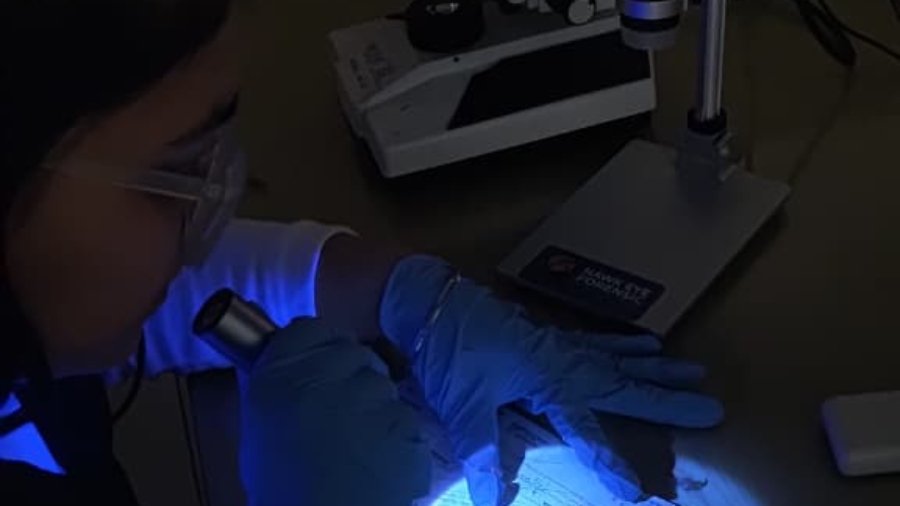
In contrast, UV light examination introduces an entirely new layer of analysis. Once UV illumination is applied, materials begin to fluoresce differently depending on their composition. As a result, hidden alterations become visible almost instantly.

Under UV light, forensic experts may observe:

  • Ink variations caused by different formulations

  • Fluorescent reactions indicating chemical erasures

  • Disturbed paper fibers from mechanical alterations

  • Embedded security features not visible under normal light

Furthermore, UV light is particularly effective in identifying document forgery. For instance, altered entries written with different ink batches may appear identical under visible light but fluoresce differently under UV illumination.

Consequently, UV light significantly increases the evidentiary value of document examination.

Visible Light vs UV Light: A Comparative Perspective

When comparing both techniques, the contrast is striking. On one hand, visible light provides clarity and readability. On the other hand, UV light reveals authenticity and manipulation.

Feature Visible Light UV Light
Readability High High
Ink differentiation Limited Excellent
Detection of erasures Poor Strong
Security feature visibility Minimal Enhanced
Forensic reliability Moderate High

Therefore, relying solely on visible light can lead to incomplete conclusions. Meanwhile, combining both techniques ensures a comprehensive and scientifically sound examination.

Importance of Alternate Light Source Examination

Alternate light source examination is not merely an optional step. Instead, it is a critical component of modern forensic practice. Because courts demand scientifically validated methods, UV-based findings add credibility to expert opinions.

Additionally, this approach helps:

  • Prevent false negatives

  • Strengthen forensic reports

  • Support courtroom testimony

  • Improve investigative accuracy

As a result, forensic laboratories worldwide consider UV examination a standard procedure in questioned document analysis.

Practical Applications in Real-World Cases

In real investigations, the difference between visible and UV light examination can be case-defining. For example, a document suspected of alteration may appear genuine under normal light. However, UV light may reveal chemical bleaching used to remove original entries.

Similarly, counterfeit documents often fail UV inspection due to missing or inconsistent security features. Thus, UV light becomes a decisive tool in fraud detection, identity verification, and financial crime investigations.

Significance for Forensic Students and Professionals

Forensic science students must understand that document examination is not limited to magnification and observation. Instead, it requires an analytical approach supported by scientific tools.

Moreover, professionals benefit from mastering UV examination techniques, as they:

  • Enhance expert credibility

  • Improve report defensibility

  • Increase evidentiary confidence

Therefore, learning to interpret UV reactions is an essential skill for any forensic document examiner.

Conclusion

In conclusion, the comparison between visible light and UV light examination clearly demonstrates that light is more than illumination—it is evidence. While visible light introduces the document, UV light uncovers its hidden history.

Ultimately, a document may tell different stories under different wavelengths. Hence, forensic truth emerges only when the right light is applied at the right time.

As a final thought, forensic examination is not about what is immediately visible, but about what science allows us to reveal.

ChatGPT Image Feb 23, 2026, 10_17_25 AM

Fake Wills and Property Documents: A Forensic Reality Behind Legal Disputes

Fake Wills and Property Documents: A Forensic Reality Behind Legal Disputes

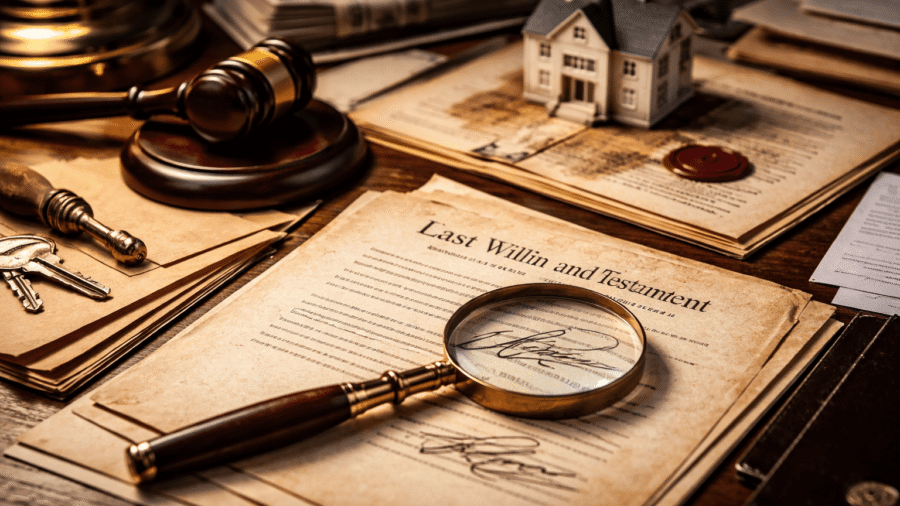
Property disputes rank among the most complex and emotionally charged legal battles. In many such cases, the dispute does not arise from ownership alone but from the authenticity of the documents involved. Fake wills and forged property documents frequently lie at the center of these conflicts, making forensic examination crucial in uncovering the truth. Consequently, Questioned Document Examination plays a decisive role in protecting legal rights and preventing injustice.

Why Property Documents Are Frequently Forged

To begin with, property documents such as wills, sale deeds, gift deeds, and powers of attorney carry immense financial and legal value. Because these documents directly influence ownership and inheritance, individuals often attempt to manipulate them for personal gain. Moreover, family disputes and rising property prices further increase the incentive for forgery.

In many instances, offenders forge documents to:

  • Exclude rightful heirs from inheritance

  • Illegally transfer property ownership

  • Exploit elderly or vulnerable individuals

  • Strengthen false claims in ongoing litigation

As a result, such fraud often remains hidden until the matter reaches court—sometimes years after the document’s alleged execution.

Common Types of Forgery in Wills and Property Documents

Forgery in property-related documents does not follow a single pattern. Instead, it appears in various forms, each demanding careful forensic scrutiny.

1. Forged Signatures

Most commonly, forgers imitate the signatures of deceased or absent individuals. However, despite their efforts, they often fail to reproduce natural rhythm, speed, and fluency. Therefore, forensic experts can detect inconsistencies through detailed handwriting analysis.

2. Fabricated Documents

In some cases, offenders create entire documents from scratch. They may include fake stamps, seals, and letterheads to simulate authenticity. Nevertheless, forensic examination frequently exposes discrepancies in paper, ink, and writing style.

3. Alterations and Additions

Sometimes, individuals modify genuine documents by altering dates, plot numbers, or beneficiary names. For example, they may overwrite existing text or add new content. As a result, such manipulations leave detectable physical and optical signs.

4. Backdated Documents

Additionally, offenders may prepare documents at a later stage but falsely date them to show execution during the lifetime of a deceased person. This tactic often fails under forensic scrutiny, especially when ink or writing characteristics do not align with the claimed time period.

5. Misuse of Blank Signed Papers

Finally, misuse of blank signed papers remains a serious concern. Individuals often convert these papers into wills or agreements without the signer’s knowledge, leading to severe legal consequences.

Forensic Examination of Disputed Wills

A will requires special attention because it becomes operative only after the testator’s death. Consequently, the absence of the writer makes verification more challenging. Therefore, forensic experts rely entirely on scientific analysis rather than personal confirmation.

During examination, experts actively assess:

  • Signature authenticity through comparison with admitted writings

  • Line quality, speed, and pen control

  • Natural variation versus signs of imitation

  • Stroke sequence and pen lifts

Typically, forged signatures display hesitation, tremors, uneven pressure, and poor rhythm. Thus, even skilled forgers struggle to conceal these indicators.

Examination of Property Documents

Unlike wills, property documents often contain multiple handwritten and printed elements. Therefore, experts examine not only handwriting but also the document as a whole.

Key areas of focus include:

  • Signatures of executants and witnesses

  • Consistency of handwriting across entries

  • Ink distribution and writing sequence

  • Evidence of overwriting, erasures, or additions

Furthermore, forensic experts examine whether all entries appear contemporaneous. If different inks or writing styles appear, the document’s credibility weakens significantly.

Importance of Admitted Specimens

Forensic comparison depends heavily on admitted specimens—documents whose authenticity no party disputes. Without reliable admitted writings, experts cannot form strong conclusions. Therefore, investigators must collect sufficient and contemporaneous samples.

Common sources of admitted specimens include:

  • Bank and financial records

  • Registered property documents

  • Government-issued identity records

  • Previous legal agreements

When admitted specimens closely match the disputed document in time and context, the forensic opinion gains substantial evidentiary value.

Role of Forensic Experts in Court

Importantly, forensic document examiners do not decide ownership or guilt. Instead, they present an impartial scientific opinion based on observable facts. Courts then evaluate this opinion alongside witness statements and circumstantial evidence.

Nevertheless, a well-reasoned forensic report often plays a decisive role. It helps courts identify forged documents, prevent unlawful property transfers, and protect legitimate heirs. Consequently, forensic examination has influenced the outcome of numerous high-value property disputes.

Prevention: Reducing Document Forgery

Although forensic science detects forgery, prevention remains equally vital. Individuals can reduce risk by adopting simple precautions. For instance, they should register wills and property documents properly, avoid signing blank papers, and store original documents securely. Additionally, regular updates to legal records and professional consultation can prevent future disputes.

Conclusion

In conclusion, fake wills and forged property documents represent more than legal irregularities—they serve as tools of deception capable of altering lives and legacies. Through systematic and scientific analysis, forensic document examination exposes these frauds and supports the justice system. Therefore, as property disputes continue to rise, the role of forensic experts becomes increasingly indispensable in ensuring that truth prevails over manipulation.

ChatGPT Image Feb 12, 2026, 03_27_34 PM

Forensic Examination of Digitally Printed Signatures

Forensic Examination of Digitally Printed Signatures

In today’s digital world, signatures no longer appear only as handwritten marks made with ink on paper. Instead, people often scan, copy, or digitally create signatures and then print them on documents. As a result, disputes involving digitally printed signatures have increased in legal, financial, and administrative cases. Therefore, forensic document examiners must understand how to examine such signatures and distinguish them from genuine handwritten ones.

What Is a Digitally Printed Signature?

A digitally printed signature is a reproduction of a signature created using digital tools. Typically, someone scans a genuine signature or creates one using software and then prints it onto a document using an inkjet or laser printer. Although the signature may look authentic at first glance, it lacks the natural features of handwriting.

Unlike handwritten signatures, digitally printed signatures do not result from muscle movement, pen pressure, or writing rhythm. Consequently, they do not show natural variations, which are key indicators of genuine writing.

Why Are Digitally Printed Signatures Examined?

Digitally printed signatures commonly appear in cases involving:

  • Property and land disputes

  • Cheque and banking fraud

  • Employment and contract fraud

  • Forged legal agreements

Moreover, the ease of copying and printing signatures has made this method popular among forgers. Therefore, forensic examination plays a crucial role in identifying whether a signature was genuinely written or mechanically reproduced.

Key Differences Between Handwritten and Digitally Printed Signatures

Before conducting an examination, it is important to understand the fundamental differences between the two.

A handwritten signature shows natural variation, meaning no two signatures by the same person are exactly identical. In contrast, digitally printed signatures often appear exactly the same when repeated.

Additionally, handwritten signatures display:

  • Pen pressure variation

  • Line quality changes

  • Natural starts and stops

  • Fluency and rhythm

On the other hand, printed signatures show:

  • Uniform line thickness

  • Absence of pressure marks

  • Pixelation or toner patterns

  • No pen lifts or hesitations

These differences guide forensic examiners during analysis.

Examination Techniques Used in Forensic Analysis

1. Visual Examination

Initially, the examiner conducts a careful visual inspection using the naked eye and low magnification. At this stage, signs such as flat appearance, lack of ink flow, and unnatural uniformity may raise suspicion.

Furthermore, repeated signatures that appear identical strongly suggest digital reproduction.

2. Magnification and Microscopic Analysis

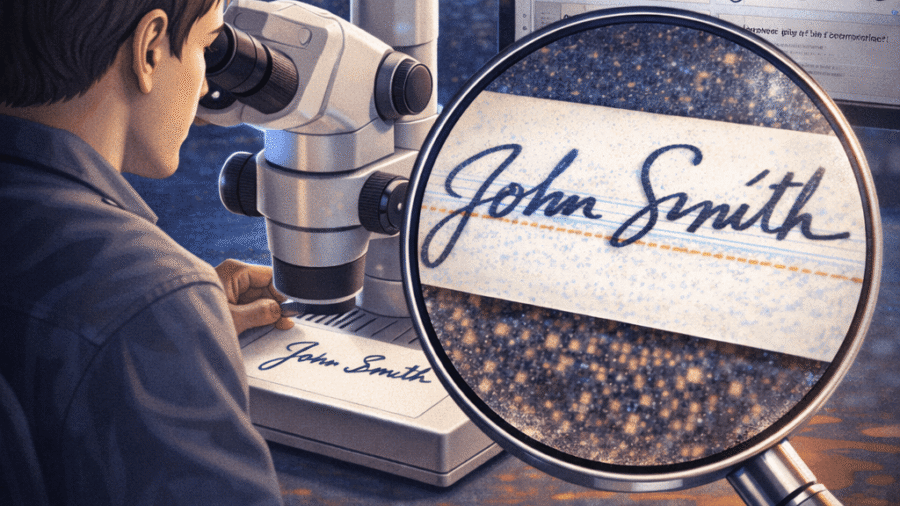
Next, the document is examined under a stereo microscope or video spectral comparator. Under magnification, printed signatures often reveal:

  • Dots or toner granules

  • Inkjet spray patterns

  • Broken or jagged edges

In contrast, genuine handwriting shows continuous ink lines and smooth curves.

3. Printer Identification Clues

In many cases, examiners analyze the printing method used. Inkjet printers deposit liquid ink that soaks slightly into paper fibers, whereas laser printers use toner that sits on the surface.

Therefore, identifying printer characteristics helps confirm whether the signature was printed rather than written.

4. Absence of Indentation and Pressure Marks

Handwritten signatures usually create indentations on the paper due to pen pressure. However, digitally printed signatures do not produce such impressions.

As a result, examiners may use oblique lighting or ESDA (Electrostatic Detection Apparatus) to detect pressure marks. The absence of indentation supports the conclusion of digital printing.

5. Comparison with Known Standards

Whenever possible, the questioned signature is compared with admitted or specimen signatures of the individual. If the questioned signature matches one specimen exactly, including minute details, it strongly indicates copying rather than genuine writing.

Natural writing always shows variation, even in skilled signatures.

Role of Technology in Examination

Modern forensic laboratories use advanced tools such as:

  • Video Spectral Comparator (VSC)

  • High-resolution scanners

  • Digital microscopy

These tools enhance the visibility of printing patterns and ink characteristics. However, expert interpretation remains essential. Technology supports the examiner but does not replace professional judgment.

Limitations of Forensic Examination

Despite advanced methods, certain limitations exist. For example:

  • Poor-quality photocopies may limit analysis

  • Heavy background printing can mask signature details

  • Lack of comparison samples may reduce certainty

Therefore, forensic opinions often include qualified conclusions rather than absolute statements.

Legal Importance of Detecting Digitally Printed Signatures

From a legal perspective, digitally printed signatures raise serious concerns. Since they can be easily copied, they do not reliably prove authorship or intent.

Courts rely on forensic experts to explain whether a signature shows signs of handwriting or mechanical reproduction. Consequently, accurate examination can significantly influence the outcome of civil and criminal cases.

Conclusion

In conclusion, the forensic examination of digitally printed signatures is a vital aspect of modern questioned document analysis. As digital tools become more accessible, the misuse of scanned and printed signatures continues to rise. Therefore, forensic document examiners must apply careful observation, scientific methods, and comparative analysis to detect such forgeries.

Ultimately, a genuine signature reflects human movement, variation, and pressure—features that no printer can truly replicate. When authenticity is questioned, forensic science ensures that documents speak the truth.

VSC6000

Role of Video Spectral Comparator (VSC) in Questioned Document Examination

Introduction

Questioned document examination plays a crucial role in forensic investigations involving disputed handwriting, signatures, printed matter, and official records. In many cases, forgers create alterations so skillfully that the naked eye cannot detect them. Therefore, forensic experts rely on advanced, non-destructive instruments to uncover hidden evidence. One such essential tool is the Video Spectral Comparator (VSC).

Over time, the VSC has become a cornerstone of modern forensic document laboratories. Moreover, it allows examiners to analyze documents under multiple light sources while preserving their original condition. As a result, courts widely accept VSC-based findings.

What Is a Video Spectral Comparator (VSC)?

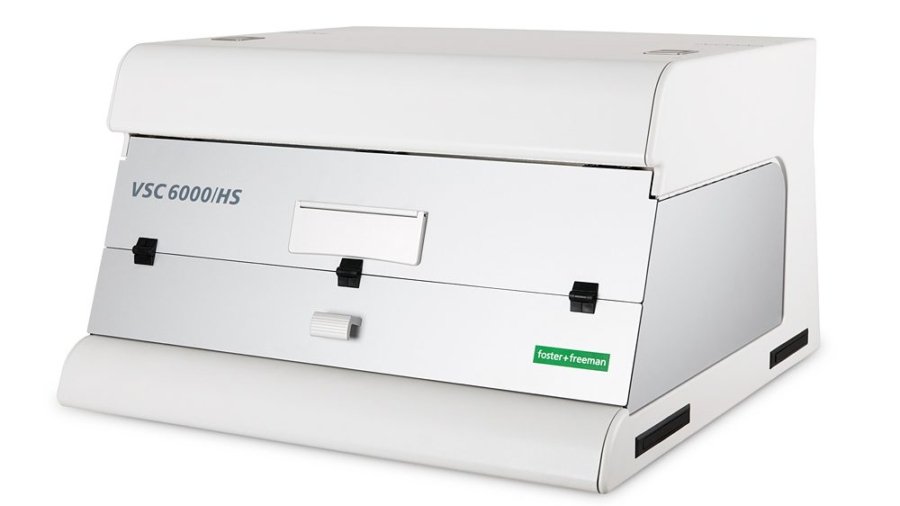
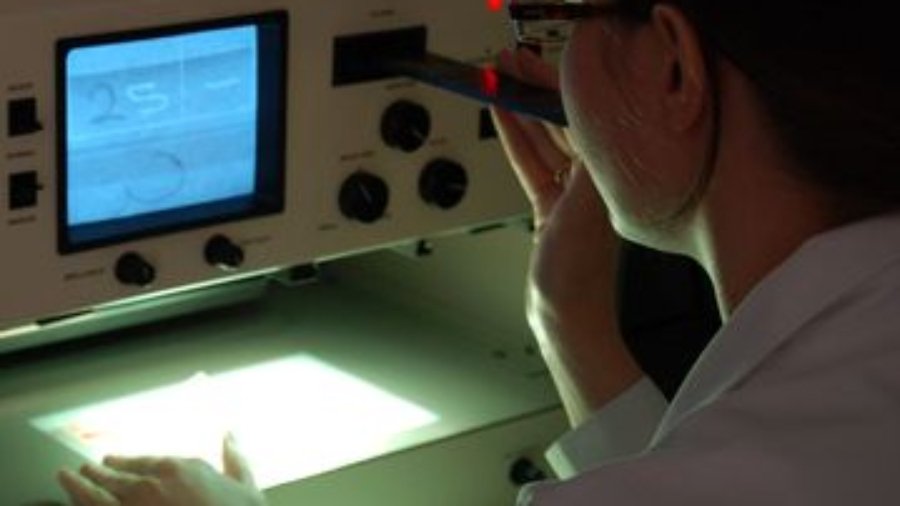
A Video Spectral Comparator is an advanced optical instrument that enables the examination of documents under ultraviolet (UV), visible, and infrared (IR) light. It integrates high-resolution cameras, spectral filters, and digital enhancement software to analyze inks, paper, and security features.

Additionally, forensic laboratories use VSC systems for:

  • Questioned document examination

  • Verification of passports, cheques, and currency

  • Detection of forged and counterfeit documents

Because VSC examination does not damage the document, examiners can safely conduct further forensic tests if required.

Importance of VSC in Questioned Document Examination

Document fraud continues to evolve with advancements in printing and writing technologies. Consequently, traditional visual examination alone often proves insufficient. VSC enhances the examiner’s ability to detect subtle differences in ink behavior, paper response, and printing methods.

Furthermore, VSC plays a critical role because:

  • Forgery techniques have become increasingly sophisticated

  • Courts demand scientifically reliable and repeatable methods

  • Evidence preservation remains legally mandatory

Therefore, VSC strengthens both the accuracy and credibility of questioned document examinations.

Applications of VSC in Questioned Document Examination

1. Ink Differentiation

Different inks may appear identical under normal lighting conditions. However, under UV or IR illumination, they often show distinct reactions. Using VSC, examiners can determine whether:

  • The same pen was used throughout the document

  • Different inks appear in questioned entries

  • Entries were written at different times

As a result, VSC proves extremely useful in cases involving disputed dates, amounts, or signatures.

2. Detection of Alterations and Erasures

Alterations can significantly change the meaning of a document. For this reason, detecting them remains a primary objective in forensic examinations. VSC helps reveal:

  • Chemical erasures that weaken paper fibers

  • Mechanical erasures that disturb the paper surface

  • Overwriting and added text

Even when offenders carefully conceal alterations, alternate light examination often exposes them.

3. Examination of Obliterated or Faded Writing

In many cases, environmental exposure or intentional actions cause writing to fade or disappear. Fortunately, infrared examination through VSC can help recover:

  • Faded or aging ink

  • Writing concealed beneath other inks

  • Obliterated or masked entries

Consequently, VSC becomes especially valuable in the examination of old wills, agreements, and archival documents.

4. Analysis of Printed Documents

With the widespread availability of printers and scanners, printed document fraud has increased significantly. Therefore, forensic experts frequently use VSC to examine printed materials such as contracts and certificates. Through this process, they can:

  • Identify differences in printer ink or toner

  • Detect altered or substituted pages

  • Examine inconsistencies in printed text

Thus, VSC plays a vital role in detecting digitally manipulated documents.

5. Examination of Security Features

Most official documents contain built-in security features that respond uniquely to UV or IR light. Using VSC, examiners can analyze:

  • Watermarks

  • Fluorescent fibers

  • Security threads

  • UV-reactive seals and inks

As a result, VSC becomes indispensable in cases involving counterfeit currency, passports, cheques, and identity documents.

Advantages of Using VSC

The Video Spectral Comparator offers several advantages in forensic document examination. First, it allows non-destructive analysis, which preserves original evidence. Additionally, it provides high sensitivity, enabling the detection of minute differences. Moreover, courts widely accept VSC findings due to their scientific reliability.

Other key advantages include:

  • Applicability to handwritten and printed documents

  • Digital image capture for documentation and reports

  • Compatibility with other forensic examination techniques

Limitations of VSC

Despite its effectiveness, VSC has certain limitations. For instance, it cannot determine the exact age of ink. Similarly, some inks may show comparable spectral behavior. Furthermore, the accuracy of results largely depends on the examiner’s expertise.

Therefore, forensic experts often support VSC findings with additional examinations such as microscopic or chemical analysis.

Conclusion

The Video Spectral Comparator serves as a fundamental tool in questioned document examination. By enabling the detection of ink differences, alterations, obliterations, and security features, VSC significantly enhances forensic accuracy. Moreover, its non-destructive nature ensures evidence preservation and legal acceptability.

Although VSC has certain limitations, trained forensic experts can effectively overcome them by combining VSC with complementary techniques. Consequently, a thorough understanding of VSC remains essential for forensic students and professionals involved in document examination.

2024-11-12-12-20-33-062-67334811ae085c4dad77fa36

Role of Digital Tools in Modern Questioned Document Examination

Role of Digital Tools in Modern Questioned Document Examination

Questioned Document Examination (QDE) has traditionally relied on meticulous visual observation, magnification, and scientific expertise to determine the authenticity of documents. Handwriting comparison, ink analysis, paper examination, and detection of alterations were once performed almost entirely using optical instruments and manual techniques. However, with the rapid advancement of technology and the increasing use of digitally created documents, the field of questioned document examination has undergone a significant transformation. Digital tools now play a crucial role in modern QDE, enhancing accuracy, efficiency, and documentation while addressing challenges posed by contemporary document fraud.

Evolution from Traditional to Digital Examination

Earlier, questioned document examiners depended on tools such as magnifying glasses, stereomicroscopes, and comparison microscopes. While these tools remain relevant, they have limitations when dealing with scanned documents, photocopies, and digitally generated files. Modern document fraud often involves high-resolution printers, sophisticated software, and digital manipulation, making traditional methods alone insufficient. As a result, digital tools have become an essential extension of the examiner’s expertise rather than a replacement.

Digital Imaging and Enhancement Tools

One of the most significant contributions of digital tools in QDE is digital imaging. High-resolution scanners and cameras allow examiners to capture detailed images of questioned and standard documents. These images can be magnified without loss of clarity, enabling close examination of minute features such as pen lifts, stroke direction, tremors, and pressure variations.

Image enhancement software helps improve contrast, brightness, and sharpness, making faint writing, erased entries, or overwritten text more visible. Techniques such as color channel separation and grayscale conversion assist in differentiating inks and identifying alterations that may not be visible to the naked eye. These tools are particularly valuable when dealing with degraded, old, or poor-quality documents.

Handwriting and Signature Analysis Software

Digital tools have significantly improved handwriting and signature examination. Specialized software allows examiners to overlay questioned and known writings, align them accurately, and compare individual characteristics such as letter formations, spacing, proportions, and connecting strokes. Measurements of slant angle, height ratios, and stroke length can be performed with precision, reducing subjectivity.

While software does not replace expert judgment, it provides objective support to the examiner’s opinion. This is especially useful in court, where visual comparisons and digital overlays can help judges and lawyers better understand the basis of forensic conclusions.

Ink and Printing Examination Using Digital Techniques

Digital tools also assist in ink and printing examination. High-resolution digital microscopy enables detailed observation of ink distribution, feathering, and stroke edges. Some software applications help differentiate inks based on color values and pixel-level analysis, which is useful when chemical analysis is not possible due to limited sample availability.

In printing examination, digital tools help distinguish between inkjet and laser printing by analyzing dot patterns, toner distribution, and printing defects. This is increasingly important as forged documents are often produced using advanced printers that closely mimic genuine documents.

Examination of Scanned and Digital Documents

In today’s digital era, examiners frequently encounter scanned documents, PDFs, and electronically generated records. Digital forensic tools enable metadata analysis, revealing information such as creation date, modification history, software used, and file origin. This data can help identify document manipulation, backdating, or unauthorized editing.

Error Level Analysis (ELA) and pixel consistency checks are also used to detect digital tampering in scanned images. These techniques help identify areas of alteration, pasted signatures, or inserted text that may otherwise appear seamless.

Documentation and Reporting Advantages

Digital tools greatly enhance documentation and reporting in questioned document examination. Examiners can store high-quality images, comparison charts, and annotated visuals in a structured digital format. This improves case management, reproducibility, and transparency.

Digital reports with visual aids strengthen expert testimony by clearly demonstrating findings. Courts increasingly prefer such presentations, as they simplify complex forensic concepts and support the credibility of expert opinions.

Limitations and Ethical Considerations

Despite their advantages, digital tools have limitations. Image quality depends on the resolution and condition of the original document. Over-enhancement may introduce artifacts that can mislead interpretation if not handled carefully. Additionally, not all software tools are standardized, and their results must be interpreted cautiously.

Ethical responsibility lies with the examiner to use digital tools as supportive aids rather than definitive decision-makers. Proper training, validation of tools, and adherence to forensic standards are essential to ensure reliability and admissibility in court.

Conclusion

Digital tools have become indispensable in modern questioned document examination. They enhance traditional methods by improving visualization, accuracy, and analytical capabilities while addressing challenges posed by contemporary document fraud. However, the core of QDE still lies in the examiner’s expertise, experience, and scientific judgment. When used responsibly and in combination with conventional techniques, digital tools significantly strengthen the effectiveness and credibility of questioned document examination in the modern forensic landscape.

Add a heading (13)

Can Ink Analysis Determine Which Entry Was Written First?

In many legal disputes and criminal investigations, a critical question arises: which entry on a document was written first? Whether it’s a will, contract, cheque, register, or medical record, determining the sequence of writing can reveal fraud, alteration, or backdating.

This is where forensic ink analysis plays a vital role. But can ink analysis truly establish which entry was written first? The answer is yes—under certain conditions. This blog explains how ink analysis works, its methods, limitations, and its evidentiary value in court.

What Is Ink Analysis in Forensic Science?

Ink analysis is a branch of Questioned Document Examination (QDE) that studies the chemical and physical properties of inks used in writing or printing. Forensic experts analyze inks to determine:

  • Whether two entries were written with the same or different inks
  • Whether an entry was added later
  • Approximate ink age (in limited cases)
  • Order or sequence of intersecting strokes

Can Ink Analysis Determine Which Entry Was Written First?

Yes, ink analysis can help determine writing sequence, especially when entries overlap, intersect, or appear altered. However, results depend on the type of ink, writing surface, and examination conditions.

Key Techniques Used to Determine Writing Sequence

1. Ink Stroke Sequence Examination

When two pen strokes intersect (such as a signature crossing text), forensic experts examine:

  • Ink flow patterns
  • Line continuity
  • Ink spreading at intersections

Using high-magnification microscopes and specialized lighting, experts can often identify which stroke lies on top, indicating which was written later.

2. Video Spectral Comparator (VSC) Analysis

VSC instruments analyze ink under:

  • Infrared
  • Ultraviolet
  • Transmitted and reflected light

Different inks respond differently to these wavelengths. If one ink absorbs or fluoresces differently, it may indicate different writing times or pen usage.

3. Thin Layer Chromatography (TLC)

TLC separates ink into its chemical components. It can show:

  • Whether two entries use the same ink formulation
  • Whether an entry was added later using a different pen

While TLC does not directly show which was written first, it supports sequencing conclusions when combined with other techniques.

4. Ink Diffusion and Absorption Analysis

Earlier writing may show:

  • Deeper ink absorption
  • Greater diffusion into paper fibers

Later entries sometimes sit more “on top” of earlier ink, especially on porous paper.

5. Electrostatic Detection (ESDA)

ESDA detects indented impressions beneath writing. If an underlying impression exists without visible ink, it may indicate:

  • Prior writing activity
  • Sequence of entries on multiple pages

Common Cases Where Ink Sequence Analysis Is Used

  • Forged or altered agreements
  • Cheque amount manipulation
  • Backdated documents
  • Property and land records
  • Medical and financial registers
  • Diaries and attendance records

Limitations of Ink Analysis

While powerful, ink analysis has limitations:

  • Same pen used at different times may be difficult to sequence
  • Gel inks and modern inks may behave similarly
  • Environmental factors (heat, light, humidity) affect ink behavior
  • Absolute dating of ink is generally not possible

For this reason, forensic opinions are often expressed as “highly probable” or “consistent with”, rather than absolute certainty.

Is Ink Sequence Analysis Admissible in Court?

Yes. When conducted by a qualified forensic document examiner using validated methods, ink analysis findings are admissible in court under expert evidence provisions. Courts often rely on such analysis in fraud and document dispute cases.

Conclusion

So, can ink analysis show which entry was written first?
The answer is yes—when the right forensic techniques are applied and conditions allow meaningful comparison. Ink analysis, combined with microscopic examination and advanced imaging, is a crucial tool for uncovering document manipulation and establishing writing sequence.

For legal cases, expert forensic examination can make the difference between truth and deception.

Frequently Asked Questions (FAQs)

Q1. Can ink analysis tell the exact date of writing?
No, exact dating is generally not possible, but relative comparisons may be made.

Q2. Does the same pen always mean same writing time?
No. The same pen can be used days or months apart.

Q3. Is ink analysis reliable?
Yes, when performed by trained experts using multiple corroborative techniques.

Add a heading (12)

Why Are Photocopies Risky in Document Examination?

In forensic document examination, the authenticity of a document depends heavily on its original physical characteristics. Despite this, investigators, lawyers, and clients often submit photocopies or scanned documents for examination. While photocopies may preserve the visible content, they fail to retain many critical forensic features. This is why photocopies are considered risky and unreliable for detailed document examination.

This blog explains each risk in detail, helping readers understand why forensic experts strongly prefer original documents.

1. Loss of Pen Pressure and Writing Depth

One of the most important elements in handwriting and signature examination is pen pressure. When a person writes on paper, pressure variations create:

  • Dark and light strokes
  • Thick and thin line variations
  • Indentations on the paper surface

Photocopies only capture the flat visual image of writing. They do not record:

  • Depth of strokes
  • Pressure changes within a single letter
  • Natural rhythm reflected through pressure variation

Without pressure evidence, examiners cannot accurately assess natural writing habits, making it difficult to differentiate between genuine writing and simulated or traced writing.

2. Distortion of Line Quality and Stroke Structure

Line quality refers to the smoothness, continuity, and natural flow of strokes. In original documents, experts examine:

  • Hesitations and tremors
  • Start and ending strokes
  • Pen lifts and overlaps

Photocopying can:

  • Break continuous lines
  • Create artificial tremors
  • Smooth out natural irregularities

These distortions may falsely suggest forgery, hesitation, or disguise, leading to misleading interpretations.

3. Ink Characteristics Cannot Be Examined

Original documents allow forensic experts to analyze:

  • Ink color variation
  • Ink flow and density
  • Aging characteristics
  • Ink absorption into paper

Photocopies convert ink into uniform toner or digital pixels, which:

  • Mask differences between inks
  • Prevent ink comparison
  • Eliminate ink sequencing analysis

This makes it impossible to determine whether:

  • Two entries were written with different pens
  • Additions were made at different times
  • Signatures were inserted later

4. Inability to Detect Alterations and Erasures

Many document frauds involve:

  • Erasures
  • Overwriting
  • Chemical alterations
  • Obliterations

In original documents, these can be detected using:

  • Oblique lighting
  • Infrared and ultraviolet examination
  • Microscopic analysis

Photocopies often hide these signs, especially if the document was photocopied after alteration. As a result, a manipulated document may appear clean and authentic, increasing the risk of false acceptance.

5. Loss of Paper Evidence and Physical Features

Paper itself provides crucial forensic clues, such as:

  • Paper thickness and texture
  • Fiber composition
  • Watermarks
  • Security features
  • Indentation marks from underlying sheets

Photocopies completely eliminate this evidence. Without the original paper, examiners cannot:

  • Match documents from the same source
  • Identify substituted pages
  • Detect indented writings

This significantly weakens forensic conclusions.

6. Problems Caused by Multiple-Generation Copies

Each generation of photocopying causes further degradation. Multiple copies may show:

  • Blurred edges
  • Broken strokes
  • Missing fine details
  • False stroke endings

These defects can:

  • Mimic signs of slow or unnatural writing
  • Create false tremors
  • Hide pen lifts

Such distortions reduce reliability and may result in inconclusive or incorrect opinions.

7. Limitations in Signature Examination

Signature verification requires close examination of:

  • Natural variation
  • Stroke sequence
  • Speed and fluency
  • Pen control

Photocopies obscure subtle features essential for distinguishing:

  • Genuine signatures
  • Traced signatures
  • Freehand simulations

Because of this, experts often cannot give a definitive opinion when only photocopies are provided.

8. Reduced Legal and Court Evidentiary Value

In courts, especially in India, forensic opinions based on photocopies:

  • Carry limited probative value
  • Are often treated as secondary evidence
  • Must be clearly qualified by the expert

During cross-examination, defense lawyers often challenge:

  • Reliability of the examination
  • Absence of original material
  • Possibility of manipulation before copying

This weakens the impact of forensic testimony.

9. Increased Risk of Misinterpretation

Because photocopies lack depth, texture, and material properties, examiners must rely only on visible form characteristics. This increases:

  • Subjectivity
  • Examiner limitations
  • Risk of misinterpretation

Responsible forensic experts clearly state these risks and avoid overstating conclusions.

10. Why Originals Are Always Preferred

Original documents allow:

  • Comprehensive handwriting and signature analysis
  • Ink and paper examination
  • Detection of alterations
  • Stronger, court-defensible opinions

Whenever possible, submission of original documents is essential for accurate forensic examination.

Conclusion

Photocopies are risky in document examination because they strip away critical forensic information related to ink, pressure, paper, and alterations. While they may be used in unavoidable situations, forensic opinions based on photocopies are inherently limited. For reliable, accurate, and legally strong conclusions, original documents remain irreplaceable.