
ChatGPT Image Mar 18, 2026, 04_12_22 PM

Erased Pencil Writing Detection in Forensic Investigations

Erased Pencil Writing Detection in Forensic Investigations

Erased pencil writing detection is a vital technique in forensic investigations. Experts use it to uncover hidden or removed information in questioned documents. Even when someone erases pencil marks, pressure impressions often remain on paper. Therefore, forensic specialists can recover this hidden evidence using scientific methods.

Why Erased Pencil Writing Detection Matters

Erasing pencil writing does not completely remove all traces. When a person writes, the pencil creates indentations on the paper surface. These impressions remain even after erasing.

Because of this, erased pencil writing detection helps investigators reveal hidden notes, altered numbers, or erased signatures. This technique plays an important role in forensic document examination and supports criminal investigations.

Techniques Used in Erased Pencil Writing Detection

Experts apply several reliable methods to recover erased writing. Each technique helps reveal different types of hidden information.

ESDA in Erased Pencil Writing Detection

The Electrostatic Detection Method (ESDA) is widely used in forensic labs. It detects indented writing left on paper.

This technique uses electrostatic charges to make hidden impressions visible. As a result, investigators can recover writing without damaging the document.

Oblique Lighting for Erased Writing

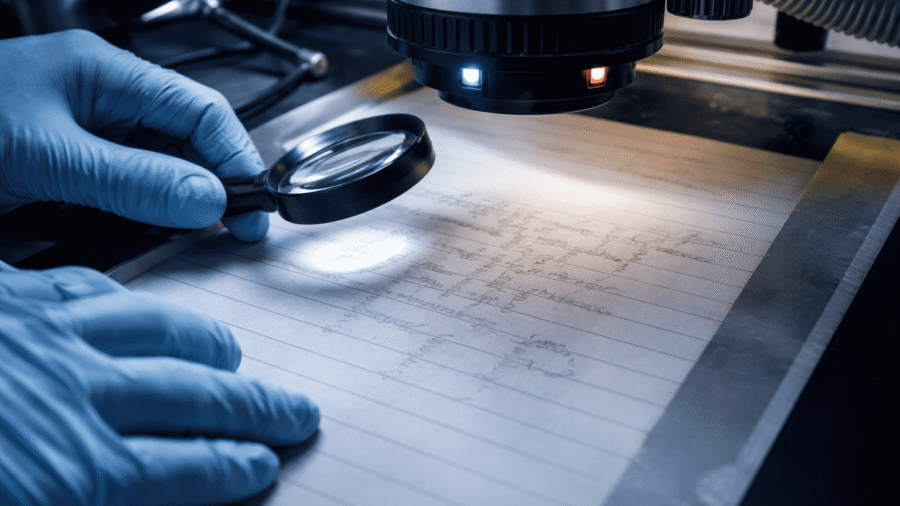
Oblique lighting is a simple yet effective technique. Investigators shine light at a low angle across the paper.

This process highlights surface indentations created during writing. It helps reveal erased content clearly.

Microscopic Analysis

Microscopic examination allows experts to observe tiny graphite particles and paper fibers. Even after erasing, small traces often remain.

This method confirms whether someone intentionally altered the document.

Digital Imaging Techniques

Modern tools enhance erased writing using high-resolution scanning and software. These tools improve contrast and visibility.

As a result, erased pencil writing detection becomes faster and more accurate.

Importance in Criminal Cases

Recovered writing often provides strong evidence. Investigators may uncover erased financial entries, hidden messages, or altered documents.

This evidence helps establish facts in fraud, forgery, and legal disputes. Courts accept such findings when experts present proper analysis.

Challenges in Detection

Although effective, this process has limitations. Heavy erasing can damage paper and reduce visible impressions.

Environmental factors like moisture and heat may also affect the document. Therefore, experts must handle evidence carefully.

Conclusion

Erased pencil writing detection remains a powerful tool in forensic investigations. Techniques like ESDA, lighting, and digital imaging help uncover hidden evidence.

As technology improves, forensic experts continue to enhance detection methods. This ensures that even erased information can support justice and legal decisions.


ChatGPT Image Mar 17, 2026, 03_00_34 PM

Adolf Hitler Diaries Forgery: A Forensic Document Case Study

Adolf Hitler Diaries Forgery: A Forensic Document Case Study

The Adolf Hitler diaries forgery remains one of the most famous document fraud cases in history. The Hitler Diaries scandal exposed how easily forged documents can mislead experts and media organizations. This case highlights the importance of scientific analysis in Forensic Document Examination and shows how investigators verify document authenticity.

Background of the Case

In 1983, a German magazine claimed it had discovered secret diaries written by Adolf Hitler. These documents were presented as personal records from World War II.

The announcement attracted global attention. Historians and collectors showed strong interest in the diaries. However, some experts quickly questioned their authenticity, which led to further investigation.

How the Forgery Was Discovered

Forensic experts examined the diaries using scientific methods. They analyzed the ink, paper, and binding materials to determine their origin.

Investigators found modern chemical compounds in the ink. These substances were not available during the 1940s. They also discovered that the paper and glue came from modern production processes.

These findings confirmed that the diaries were forged.

Forensic Techniques Used

Experts used several techniques to expose the fraud.

Ink Analysis

They tested the chemical composition of the ink and found synthetic materials developed after World War II.

Paper Examination

They examined the paper fibers and identified modern manufacturing elements.

Handwriting Comparison

They compared the writing with verified samples. Although the style looked similar, inconsistencies appeared.

These combined methods helped investigators reach accurate conclusions.

The Forger Behind the Diaries

Konrad Kujau created the fake diaries. He forged historical documents and sold them to collectors.

He tried to replicate handwriting and artificially age the documents. However, forensic testing revealed the truth. This case proves that scientific analysis can uncover even advanced forgeries.

Impact on Forensic Science

The scandal had a strong impact on forensic practices. It forced institutions to verify documents more carefully.

Organizations such as the Federal Bureau of Investigation improved document analysis techniques. It also increased awareness about document fraud in research and journalism.

Lessons from the Case

This case highlights several important lessons.
Investigators must rely on scientific methods rather than assumptions.
Experts should analyze multiple elements such as ink, paper, and handwriting.
Organizations must verify documents before accepting them as genuine.

Conclusion

The Hitler diaries forgery case remains a powerful example of how forensic science protects historical accuracy. By using proper techniques, investigators exposed one of the biggest document frauds in history.