ChatGPT Image Mar 31, 2026, 10_58_41 AM

Ink Differentiation Using Chromatography Techniques in Forensic Document Examination

Introduction

In forensic document examination, identifying whether a document has been altered is crucial. One of the most effective methods used for this purpose is ink differentiation. In particular, chromatography techniques allow experts to analyze and compare inks used in questioned documents.

As document fraud increases, these scientific methods have become essential tools for forensic investigators to ensure authenticity and detect tampering.

What is Ink Differentiation?

Ink differentiation is the process of distinguishing between different inks used in a document. In other words, it helps determine whether multiple inks were used at different times or by different individuals.

Furthermore, this technique is especially useful in cases involving:

  • Altered legal documents
  • Forged signatures
  • Added or modified text

Therefore, it plays a vital role in forensic investigations.

Introduction to Chromatography

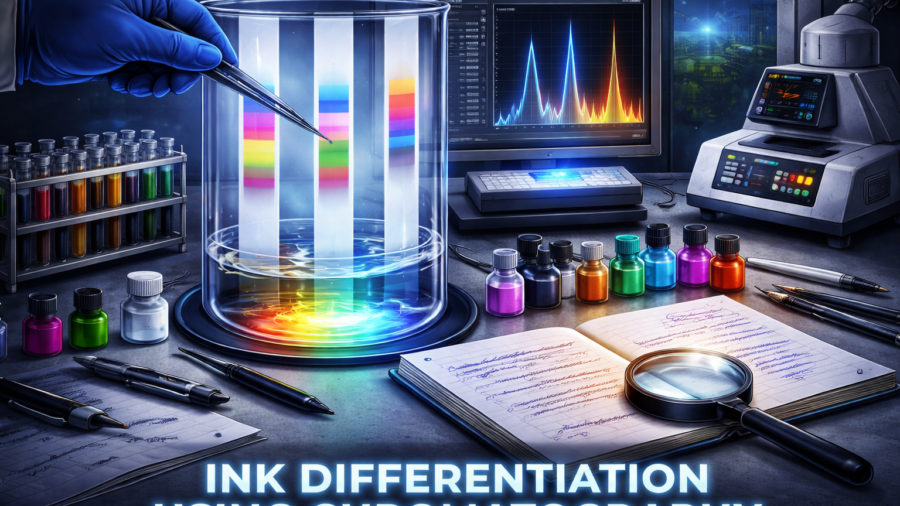
Chromatography is a laboratory technique used to separate components of a mixture. In the context of forensic science, it helps break down ink into its chemical components.

Typically, inks contain dyes, pigments, and solvents. By separating these elements, forensic experts can compare different ink samples accurately.

Types of Chromatography Used in Ink Analysis

Paper Chromatography

First of all, paper chromatography is one of the simplest and most commonly used methods. A small ink sample is placed on paper and exposed to a solvent, which separates the ink into different रंग components.

Thin Layer Chromatography (TLC)

Next, TLC uses a coated plate instead of paper. As a result, it provides more precise separation and better analysis of ink components.

Gas Chromatography

Additionally, gas chromatography is used for analyzing volatile components of ink, such as solvents.

High-Performance Liquid Chromatography (HPLC)

Finally, HPLC is an advanced technique that offers highly accurate results and is widely used in forensic laboratories.

How Chromatography Helps in Ink Differentiation

Chromatography works by separating ink into its individual chemical components. As a result, each ink produces a unique pattern, often called a chromatogram.

For example, two inks that appear identical to the naked eye may show completely different patterns when analyzed.

Therefore, experts can:

  • Identify different inks used in a document
  • Determine whether additions were made later
  • Link ink to a specific pen or source

Importance in Forensic Document Examination

Ink differentiation is crucial for verifying document authenticity. In many cases, criminals attempt to alter documents by adding or changing information.

However, chromatography can reveal these changes by detecting inconsistencies in ink composition.

Moreover, it helps forensic experts:

  • Establish timelines for writing
  • Detect forgery and alterations
  • Provide scientific evidence in court

Challenges in Ink Differentiation

Sample Destruction

On one hand, some chromatography techniques require small samples, which may slightly damage the document.

Similar Ink Composition

On the other hand, modern inks may have similar chemical compositions, making differentiation difficult.

Environmental Factors

Additionally, exposure to light, heat, and moisture can affect ink composition over time.

Role of Technology in Modern Ink Analysis

With technological advancements, ink differentiation has become more precise. For instance, digital imaging and spectroscopy are often combined with chromatography for better results.

Furthermore, automated systems can analyze chromatograms quickly and accurately.

Consequently, these innovations enhance the reliability of forensic examinations.

Applications of Chromatography in Forensics

Chromatography techniques are widely used in:

  • Document forgery detection
  • Fraud investigations
  • Historical document analysis
  • Legal dispute resolution

In addition, they are also used in other forensic fields such as drug analysis and toxicology.

Conclusion

To sum up, ink differentiation using chromatography techniques is a powerful tool in forensic document examination. By separating ink into its chemical components, experts can detect alterations and verify authenticity.

Ultimately, as forensic science continues to evolve, these techniques will remain essential in combating document fraud and ensuring justice.
ChatGPT Image Mar 12, 2026, 10_50_42 AM

How Ultraviolet Light Reveals Hidden Alterations in Documents

How Ultraviolet Light Reveals Hidden Alterations in Forensic Documents

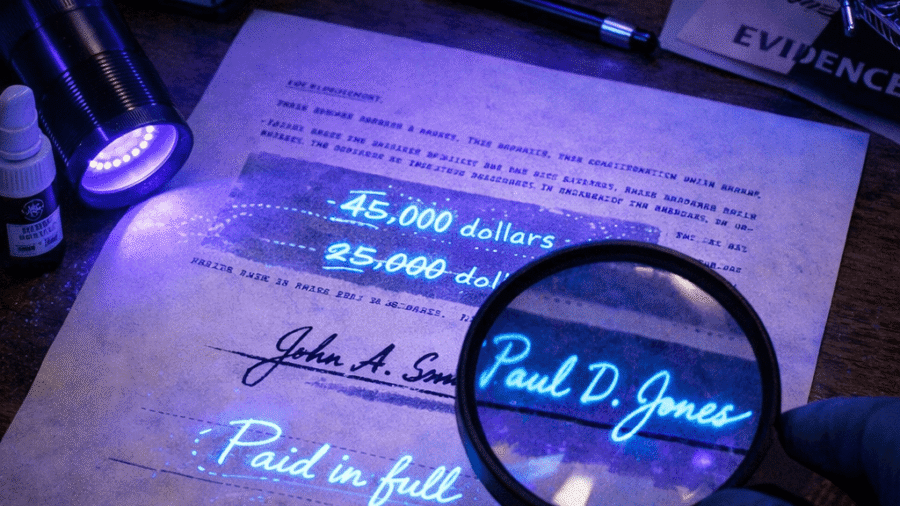
Ultraviolet light in document examination plays an important role in modern forensic investigations. Many criminals attempt to alter documents by erasing, overwriting, or modifying information. These alterations may look invisible under normal lighting. However, forensic experts can detect such hidden changes using ultraviolet light. By exposing documents to ultraviolet radiation, investigators can identify erased writing, ink differences, and other signs of tampering.

Role of Ultraviolet Light in Document Examination

Ultraviolet light in document examination helps forensic scientists analyze documents that may contain hidden or altered information. Ultraviolet radiation belongs to a part of the electromagnetic spectrum that the human eye cannot see. However, when forensic experts shine ultraviolet light on a document, certain materials react differently.

For example, paper, ink, and correction fluids often absorb or reflect ultraviolet light in unique ways. As a result, hidden alterations may appear as glowing, darkened, or fluorescent areas. Because of this property, investigators frequently use ultraviolet examination in the field of Forensic Science and Questioned Document Examination.

How Ultraviolet Light Detects Hidden Alterations

Forensic specialists use ultraviolet light in document examination to reveal changes that remain invisible under normal light. First, investigators place the document under a controlled ultraviolet lamp. Then they observe how different areas react to the light.

Several types of alterations can be detected using this technique:

  • Erasures: Mechanical erasing damages paper fibers. Under ultraviolet light, these damaged areas reflect light differently.
  • Ink differences: Two inks may look identical in daylight but show clear differences under ultraviolet radiation.
  • Overwriting: Added text often appears darker or brighter when exposed to ultraviolet light.
  • Correction fluids: Chemical substances used to hide text may fluoresce under ultraviolet light.

Therefore, ultraviolet examination allows investigators to detect document tampering quickly and accurately.

Ultraviolet Light and Ink Analysis

Another important use of ultraviolet technology involves ink analysis. Different inks contain different chemical compositions. When exposed to ultraviolet radiation, these chemicals react in distinct ways.

For instance, one ink may glow brightly while another appears dull or dark. This reaction helps investigators determine whether someone added new information to a document after its creation. Often, this technique reveals fraudulent alterations in contracts, financial records, or official forms.

Because of these advantages, ultraviolet light in document examination remains a valuable method in forensic laboratories.

Use of Technology in Ultraviolet Document Analysis

Modern forensic laboratories combine ultraviolet light with advanced digital imaging technology. High-resolution cameras capture images of documents under ultraviolet illumination. Investigators can then analyze these images using specialized software.

Digital analysis allows experts to zoom in on tiny details such as ink strokes, paper fibers, and surface damage. In addition, digital enhancement improves contrast between altered and original areas of the document.

These technological improvements increase the accuracy of forensic document analysis and help experts present clear evidence in court.

Advantages of Ultraviolet Light in Document Examination

Ultraviolet analysis offers several advantages for forensic investigations.

First, the method is non-destructive. Investigators can examine documents without damaging the original evidence.

Second, ultraviolet light reveals alterations that remain invisible under normal lighting conditions. Consequently, investigators can uncover hidden information without physically modifying the document.

Third, the process is relatively quick and efficient. Forensic laboratories often use ultraviolet light as an initial screening method before performing advanced chemical tests.

Limitations of Ultraviolet Document Examination

Despite its usefulness, ultraviolet examination also has limitations. Some inks and papers react very similarly to ultraviolet light, making differences harder to detect.

Additionally, environmental conditions such as ageing, sunlight exposure, or moisture may affect how materials respond to ultraviolet radiation. Therefore, forensic experts often combine ultraviolet examination with other techniques such as infrared analysis or microscopic inspection.

Using multiple forensic methods ensures more reliable results during document analysis.

Conclusion

Ultraviolet light in document examination plays a crucial role in detecting hidden alterations in forensic documents. By exposing documents to ultraviolet radiation, investigators can reveal erased writing, ink differences, and signs of tampering that remain invisible to the naked eye.

This technique supports criminal investigations by uncovering important evidence hidden within documents. As forensic technology continues to advance, ultraviolet examination will remain an essential tool for document analysis and fraud detection.