Introduction
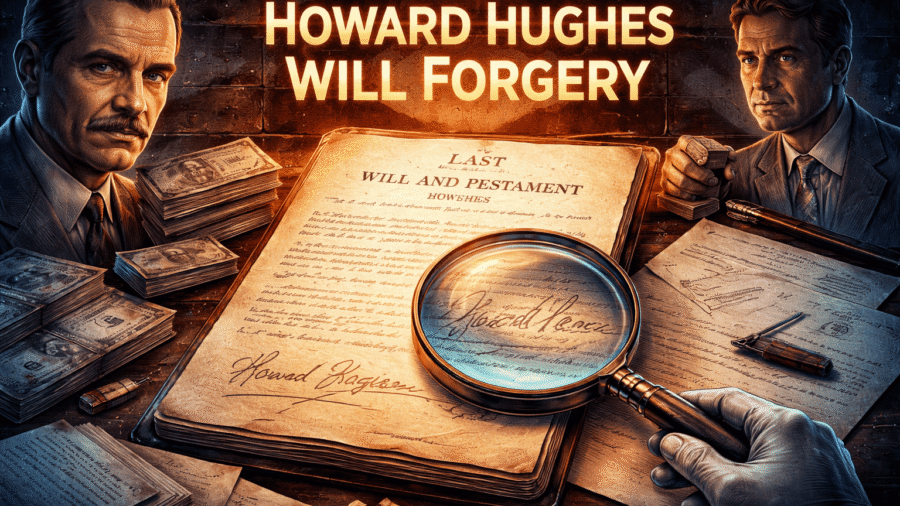
The Howard Hughes will forgery case is still one of the most interesting examples of forensic document examination in modern history. Following the death of billionaire Howard Hughes in 1976, a mysterious handwritten will surfaced, sparking controversy and legal battles over his vast fortune.
Therefore, this case became a landmark in forensic science, demonstrating how handwriting analysis and document examination can uncover fraud. The so-called “Mormon Will” not only captured public attention but also highlighted the importance of scientific methods in verifying questioned documents.
Background of the Case
Howard Hughes was a reclusive billionaire known for his business empire and eccentric lifestyle. After his death, confusion surrounded the distribution of his estate because no clear will had been officially recorded.
However, shortly after his death, a handwritten document was discovered at the Church of Jesus Christ of Latter-day Saints’ headquarters. This document claimed to be Hughes’ final will.
Most notably, the will included surprising provisions, with a significant portion of Hughes’ fortune left to a gas station owner named Melvin Dummar. As a result, the case quickly gained national attention and raised serious questions about its authenticity.
The Suspicious Will
The alleged will appeared simple and informal, lacking the structure expected from a billionaire’s legal document. In addition, several unusual aspects raised suspicion:
- The document lacked proper legal formatting
- It appeared suddenly without a clear origin
- The handwriting seemed inconsistent with known samples
- Witness credibility was questionable
Therefore, experts were called in to conduct a detailed forensic document examination.
Role of Handwriting Analysis
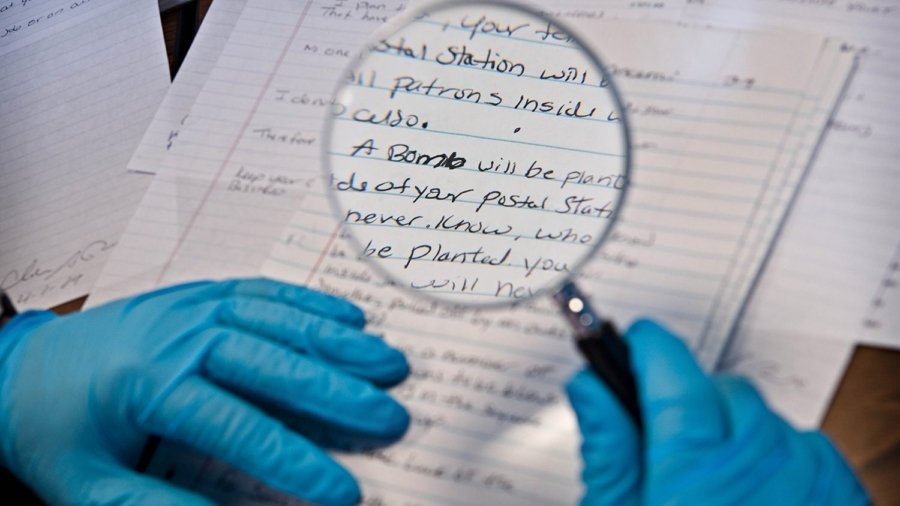
Handwriting analysis played a crucial role in determining whether the document was genuine. In forensic document examination, experts compare questioned writing with verified samples to identify similarities and differences.
Key Factors Examined
- Letter formation and style
- Spacing between words and lines
- Slant and alignment
- Writing pressure and stroke patterns
By analyzing these elements, forensic experts concluded that the handwriting on the will did not match authentic samples of Hughes’ writing.
Signature Analysis
The signature on the document was also carefully examined. However, inconsistencies in stroke order and fluency suggested that it was not naturally written.
As a result, experts determined that the signature was likely forged rather than genuine.
Investigation and Court Proceedings
As the case progressed, forensic evidence became central to the legal proceedings. Moreover, investigators examined not only the handwriting but also the circumstances surrounding the document’s discovery.
Melvin Dummar claimed that Hughes had personally given him the will. However, his story contained inconsistencies, which weakened his credibility.
Consequently, the court relied heavily on forensic analysis and expert testimony to evaluate the authenticity of the document.
Final Verdict
After a thorough examination, the court ruled that the will was a forgery. Therefore, the document was declared invalid, and the claims made under it were rejected.
The estate of Howard Hughes was distributed according to legal procedures rather than the forged will.
Ultimately, the case reinforced the importance of forensic document examination in resolving disputes involving questioned documents.
Importance of the Case in Forensic Science
The Howard Hughes will forgery case had a lasting impact on the field of forensic science. In particular, it demonstrated how handwriting analysis can provide reliable evidence in legal disputes.
Key Lessons
- Forensic document examination is essential in verifying authenticity
- Handwriting analysis can detect even sophisticated forgeries
- Legal systems increasingly rely on scientific evidence
- Questioned documents must be thoroughly investigated
Furthermore, the case highlighted the need for proper documentation and secure handling of legal documents.
Challenges in Forgery Detection
Despite its success, the case also revealed challenges in detecting forged documents:
- Skilled forgers can imitate writing styles
- Limited authentic samples may complicate analysis
- External factors can influence handwriting
Nevertheless, trained forensic experts can identify subtle inconsistencies that reveal the truth.
Conclusion
The Howard Hughes will forgery case stands as a landmark example of how forensic handwriting analysis can expose fraudulent documents. In conclusion, this case illustrates the critical role of questioned document examination in legal investigations.
Therefore, as document forgery continues to evolve, the importance of forensic science in detecting and preventing fraud remains stronger than ever.