

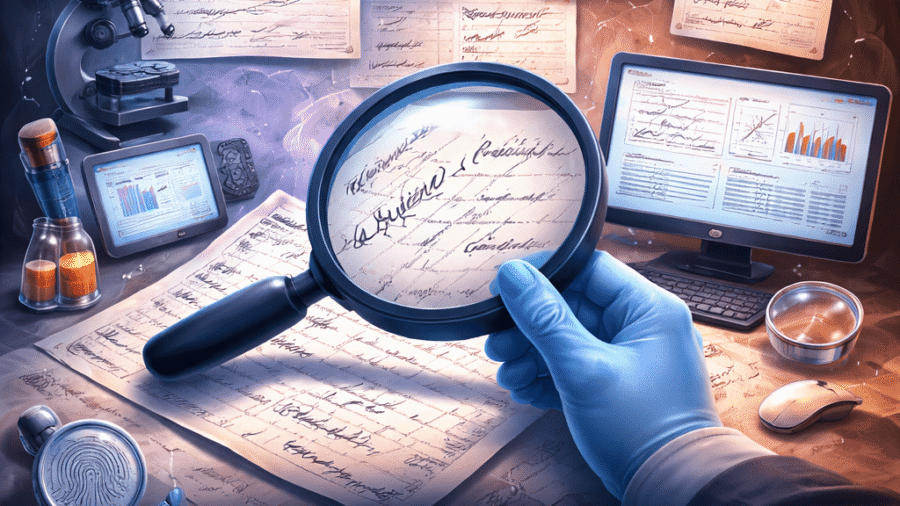
Forensic Handwriting Examination: Detecting Truth in Documents
In the world of forensic science, documents often hold critical evidence. From legal contracts to handwritten notes, every stroke of a pen can reveal important clues. Forensic handwriting examination plays a vital role in uncovering the truth behind such documents. It helps experts determine authenticity, identify writers, and detect forgery.
Therefore, this field is essential in both criminal investigations and civil disputes.
What is forensic handwriting examination?
Forensic handwriting examination, also known as questioned document examination, involves the scientific analysis of handwriting to verify its authenticity. Experts study various characteristics of writing to determine whether a document is genuine or forged.
In simple terms, it is the process of comparing known handwriting samples with questioned documents to detect similarities or differences.
Key Principles of Handwriting Analysis
Handwriting is considered unique to each individual. However, it is not completely unchangeable. Experts rely on certain principles while conducting handwriting analysis in forensics:
- Individuality: No two people write the same
- Natural variation: A person’s handwriting may vary slightly over time
- Consistency: Genuine writing shows consistent patterns
Thus, examiners look for a combination of similarities and natural variations rather than exact matches.
Techniques Used in Forensic Handwriting Examination
Experts use various scientific techniques to analyze handwriting. Moreover, these methods ensure accuracy and reliability.
1. Visual Examination
Initially, examiners study the document using the naked eye or magnification tools. They analyze:
- Letter shapes and formations
- Spacing between words and letters
- Writing speed and pressure
2. Microscopic Analysis
Additionally, microscopes help identify fine details such as ink flow, pen lifts, and stroke order.
3. Digital Analysis
Modern technology allows experts to use software for precise comparisons. Consequently, experts can detect even subtle differences.
4. Signature Verification
Signatures are one of the most commonly examined elements. Therefore, signature verification is crucial in financial and legal fraud cases.
Detecting Forgery in Documents
Forgery is one of the primary concerns in document examination. However, detecting forgery is not always straightforward. There are different types of forgery:
🔹 Simple Forgery
The forger writes a name without trying to imitate the original handwriting.
🔹 Simulated Forgery
The forger attempts to copy someone else’s handwriting or signature.
🔹 Traced Forgery
The original writing is traced to create a duplicate.
In each case, forensic experts analyze inconsistencies such as unnatural pen pressure, slow writing, and tremors. Consequently, these signs help in detecting forgery in documents.
Applications in Real-World Cases
Forensic handwriting examination is widely used in various scenarios. For example:
- Legal disputes: Verifying wills, contracts, and agreements
- Financial fraud: Detecting forged signatures on checks or documents
- Criminal cases: Identifying anonymous letters or threat notes
- Historical investigations: Authenticating old manuscripts
As a result, this field plays a crucial role in delivering justice.
Challenges in Handwriting Examination
Despite its importance, forensic handwriting examination comes with challenges. Firstly, handwriting can change due to age, illness, or emotional state. Secondly, skilled forgers may imitate writing convincingly.
- Limited or poor-quality samples
- Intentional disguise of handwriting
- Lack of sufficient comparison material
Nevertheless, trained experts can still reach reliable conclusions using scientific methods.
Importance in Forensic Science
Understanding forensic handwriting examination is essential because it helps uncover hidden truths. Moreover, it provides valuable evidence in courts and investigations.
- Supports criminal investigations
- Strengthens legal arguments
- Helps prevent fraud
Therefore, handwriting analysis remains a powerful tool in forensic science.
Future of Handwriting Examination
With advancements in technology, handwriting analysis is evolving. For instance, we are using artificial intelligence and machine learning to enhance accuracy.
- AI-based handwriting recognition
- Digital forensic tools
- Improved imaging techniques
As a result, the future of handwriting analysis in forensics looks more precise and reliable than ever.
Conclusion
Forensic handwriting examination is a fascinating and essential branch of forensic science. In conclusion, it helps detect truth in documents by analyzing writing patterns, identifying inconsistencies, and exposing forgery.
Ultimately, whether it is a disputed signature or an anonymous note, handwriting analysis plays a key role in uncovering the truth and ensuring justice.